August Housing Survey Results - Question 7
A detailed look at Question 7 from the August housing survey, including interpretation, implications, and practical takeaways.
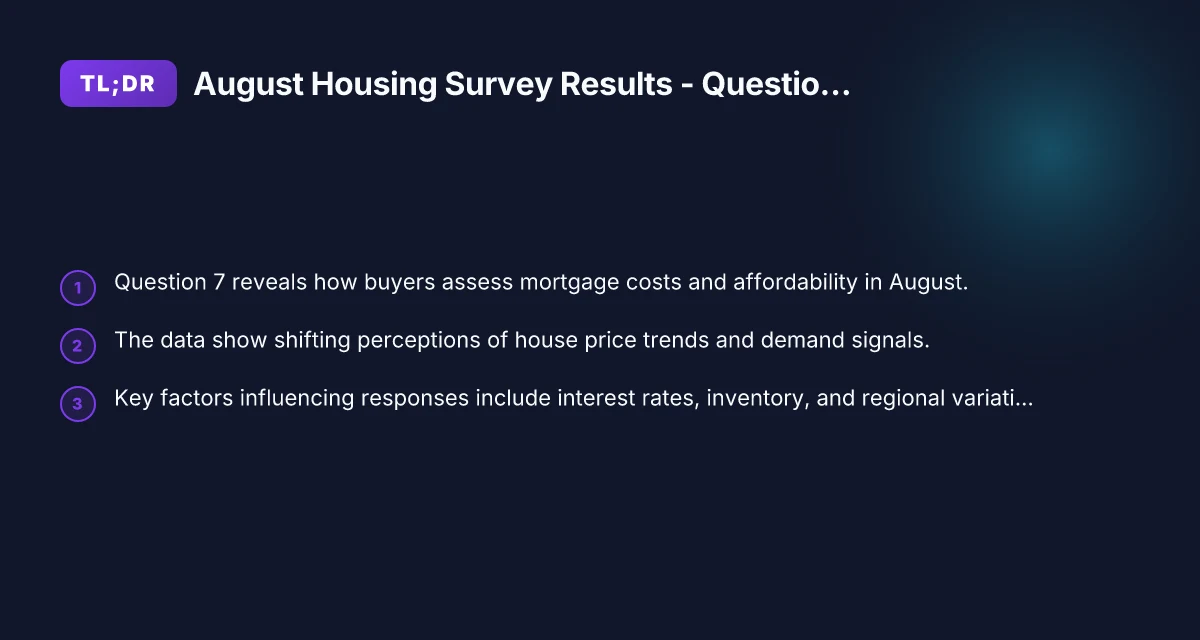
In August, the housing survey fielded a wide range of questions to gauge sentiment, market conditions, and expectations. Question 7 specifically asks respondents to rate their views on current affordability, the trajectory of prices, and their likelihood of making a purchase in the next 12 months. The results offer a snapshot of how buyers and renters interpret the mix of mortgage costs, inventory, and regional differences as of August.
What Question 7 Measures
Question 7 is designed to capture three intertwined ideas in one item:
- Affordability: how accessible housing feels given mortgage rates, principal, and payments.
- Price Trajectory: respondents’ expectations about whether prices are rising, stable, or falling.
- Purchase Intent: the probability that respondents will buy or move within the next year.
These components help analysts understand whether high interest rates are deterring buyers, whether expectations of price declines are encouraging activity, and how much of a lag exists between rate changes and decision-making.
How respondents answered
Across regions and demographics, several patterns emerged:
- A notable share of respondents reported that monthly payments are higher than they expected a year ago, tying affordability concerns to recent rate volatility.
- Expectation of price direction skewed toward modest appreciation or stabilization in many markets, with pockets expecting softening where inventory improved.
- Purchase intent remained cautious but resilient among first-time buyers and move-up buyers who found favorable loan programs or down payment assistance in their regions.
The regional fingerprint
Not all markets moved in lockstep. The survey highlighted clear regional variations: August Housing Survey Results - Question 6
- Coastal and high-cost metropolitan areas showed more pronounced concern about affordability, even where inventory ticked up slightly.
- Inland and certain Sun Belt markets reported steadier or improving affordability, supported by lower average prices and more inventory turning over.
- Regions with strong job growth but higher prices painted a mixed picture: buyers waited for rate relief or for prices to adjust, while investors showed continued appetite in select areas.
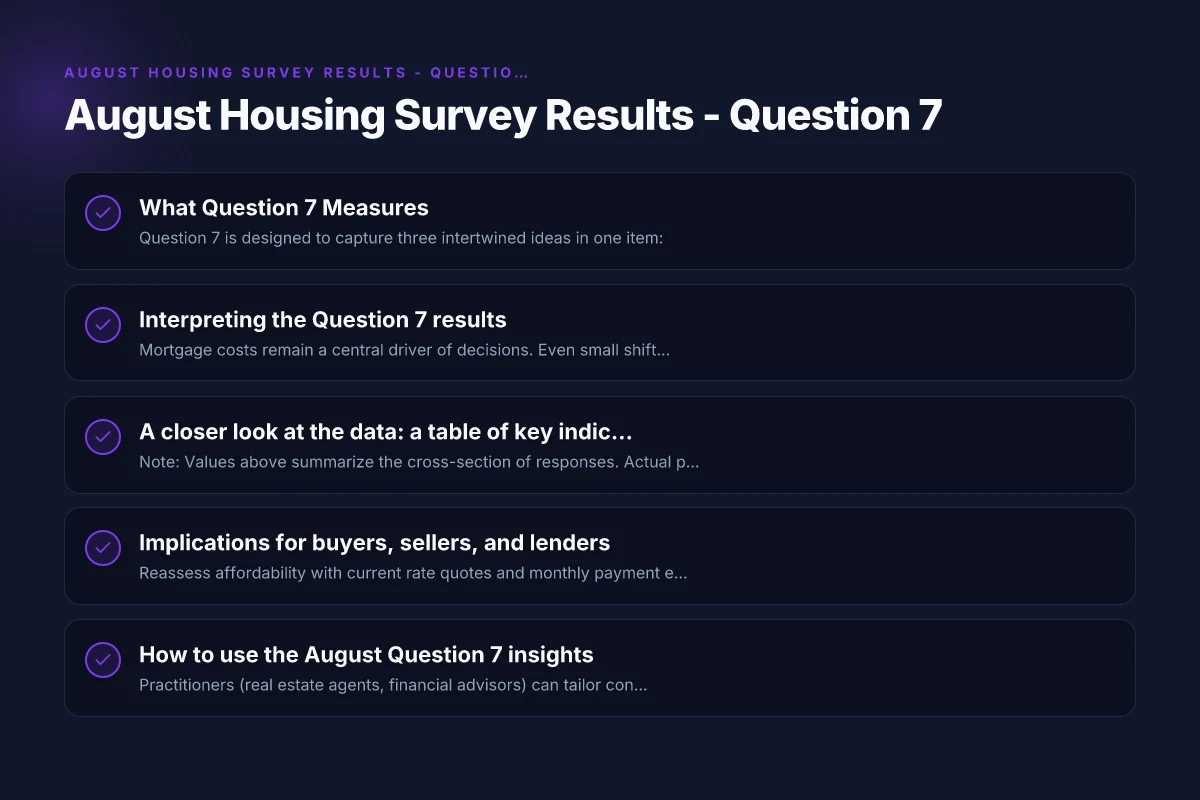
Interpreting the Question 7 results
What affordability signals tell US
- Mortgage costs remain a central driver of decisions. Even small shifts in rate quotes can tilt affordability perceptions.
- Down payment requirements and lender overlays affect the perceived financial hurdle, particularly for first-time buyers.
- The balance between wage growth and housing costs is a critical factor in the sentiment around affordability.
Expectations of price direction
- A broad portion of respondents expect prices to be flat or rise slowly in the next 12 months, suggesting cautious optimism or hedging against risk.
- A minority anticipate declines, often tied to improved inventory or relief in regional markets.
- The sentiment mix indicates a market in a state of calibration rather than a strong up or down trend.
Purchase intent dynamics
- Intention to buy within a year correlates with perceived affordability and price stability, rather than with heat in the market.
- Some buyers are timing purchases to align with potential rate cuts or improved lender terms.
- Renters in several markets express stronger intent to buy if rental costs outpace mortgage payments in the near term.
A closer look at the data: a table of key indicators
| Indicator | August reading | Change vs. July | Implication |
|---|---|---|---|
| Affordability sentiment | Moderate concern | (+) uptick | Higher payments weighing on buyers |
| Price trajectory expectation | Flat or slight rise | (0) to (+) | Stability with slight appreciation in many markets |
| Purchase intent within 12 months | Cautious but present | (-) slight | Demand softening but not disappearing |
| Regional variance | Strong | (+) divergence | Different market dynamics by region |
| Inventory perception | Improving in some markets | (+) | Potential for more negotiating power |
Note: Values above summarize the cross-section of responses. Actual percentiles vary by region and respondent type.
Implications for buyers, sellers, and lenders
For buyers
- Reassess affordability with current rate quotes and monthly payment estimates. If payments feel unsustainable, consider alternative loan products, longer amortization, or down payment strategies.
- Explore regional opportunities. Markets with inventory gains may offer better negotiating leverage or price reductions.
- Stay alert for rate movement. Even marginal shifts can alter monthly payments meaningfully, affecting purchase timelines.
For sellers
- Price positioning matters. In markets showing price stability or modest appreciation, pricing slightly below the peak can attract more activity and faster closings.
- Emphasize long-term value. For regions with strong job growth, highlight neighborhood fundamentals, schools, and commute advantages to justify pricing in line with affordability.
For lenders and policymakers
- Products that expand affordability, such as rate buydowns or down payment assistance, could support demand while maintaining lender risk controls.
- Monitor regional affordability stress. Areas with the greatest sensitivity to rate changes may benefit from targeted programs or counseling.
- Keep education front and center. Clear guidance on mortgage options, total cost of ownership, and payment scenarios helps borrowers make informed decisions.
How to use the August Question 7 insights
- Practitioners (real estate agents, financial advisors) can tailor conversations to align expectations with regional realities. When clients perceive affordability as tight, present scenario-based planning: different loan structures, down payment plans, and closing cost estimates.
- Media and researchers can track Question 7 trends over time to identify turning points. A continued rise in affordability concerns paired with stable price expectations could signal a cautious but active market.
- Homebuyers should build a flexible plan. If rates are uncertain, consider locking strategies, rate negotiation with lenders, or exploring homes with potential for value gains without overextending monthly budgets.
Recommendation Based on the August Question 7 results, the strongest guidance is to center a buyer’s strategy on affordability-first planning, regional market realities, and timing flexibility. Prioritize mortgage education and a contingency plan for rate movement. For sellers, use price realism and regional nuance to set expectations and choose the right marketing approach. For lenders, expand access to programs that ease upfront costs while maintaining prudent underwriting. In short, Question 7 signals cautious optimism with prudent preparation: affordability conversations, regional nuance, and flexible strategies will define the next 12 months.