Challenge for Youth: Turning Obstacles into Opportunity
A practical guide to understanding and navigating challenges youth face, with actionable strategies and real-world examples.
In today’s fast-changing world, youth are often tasked with navigating a maze of academic expectations, social dynamics, digital life, and personal identity. “Challenge for Youth” is not just about surviving these pressures. It’s about learning to leverage them as fuel for growth. This article outlines common youth challenges, practical strategies to meet them, and real-world examples that show how resilience and proactive planning can turn obstacles into opportunities.
Comparison of Common Youth Challenges
| Challenge | Typical Impact | Likelihood | Coping Difficulty | Notes |
|---|---|---|---|---|
| Academic pressure | High | Common | Moderate | Short-term stress prominent |
| Mental health concerns | Moderate to high | Increasing | High | Access varies by area |
| Social media influence | Moderate | High | Moderate | Exposure varies |
| Economic hardship | Varies | Present | High | Often persistent |
| Time management | Moderate | Common | Moderate | Skill-based improvement possible |
| Family conflict | Moderate | Common | Moderate | Supportive environments help |
| Bullying or harassment | Moderate to high | Present | High | School and online contexts |
Compiled November 2026; check the provider's site for current details.
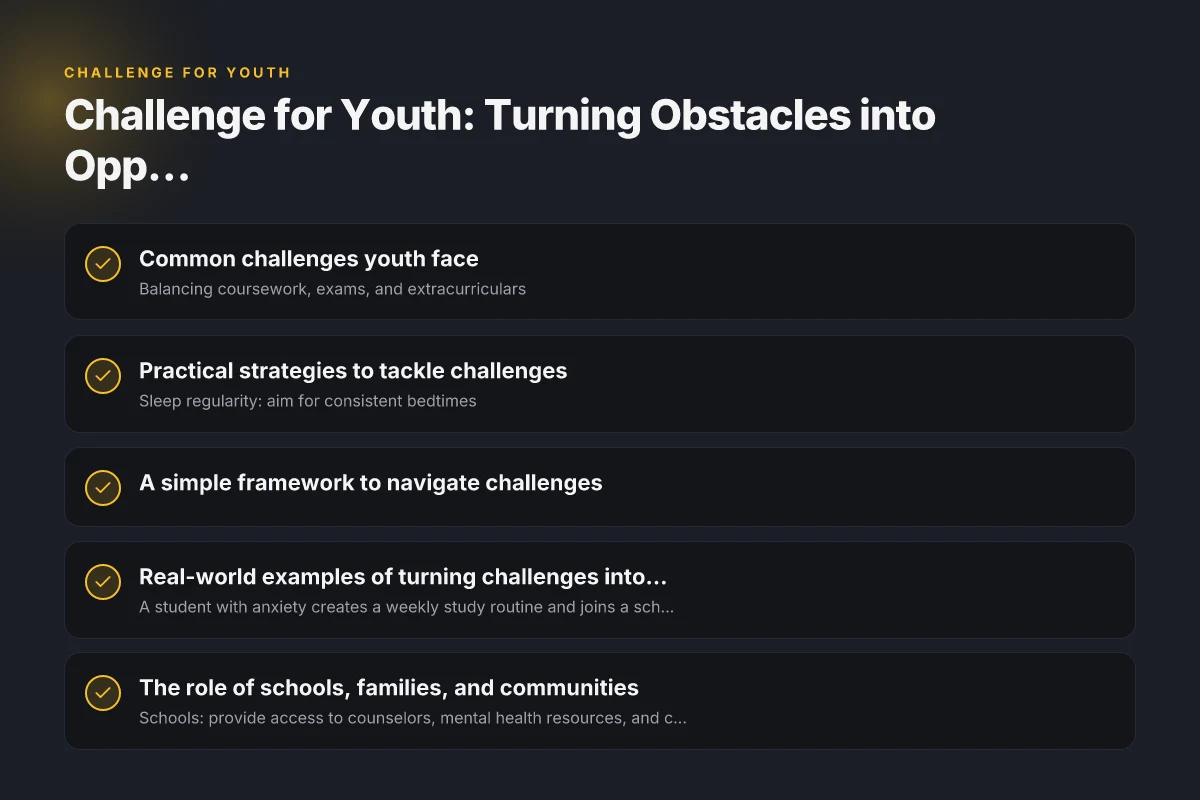
Common challenges youth face
Academic pressures and expectations
- Balancing coursework, exams, and extracurriculars
- Fear of failure or underperformance
- Limited access to resources or support
Mental health and well-being
- Anxiety, stress, and sleep disruption
- Social media impact on self-esteem
- Stigma around seeking help
Social dynamics and identity
- Peer pressure and belonging
- Navigating friendships, dating, and inclusivity
- Exploring personal interests and values
Career exploration and future planning
- Uncertainty about pathways
- Limited work experience or mentorship
- Gap between school skills and real-world application
Digital life and information literacy
- Cyberbullying and online safety
- News literacy and misinformation
- Managing screen time and focus
Practical strategies to tackle challenges
Build a personal resilience toolkit
- Sleep regularity: aim for consistent bedtimes
- Daily micro-habits: 5-minute planning breaks, gratitude notes
- Stress-reduction techniques: deep breathing, short meditations
Seek mentorship and support networks
- School counselors, teachers, coaches
- Community programs, clubs, and after-school activities
- Peer support groups and study circles
Set SMART goals with small wins
- Specific, Measurable, Achievable, Relevant, Time-bound goals
- Break big aims into weekly milestones
- Track progress and adjust as needed
Develop critical thinking and information literacy
- Question sources, cross-check facts, seek multiple perspectives
- Practice evaluating online content and rumors
- Learn to distinguish opinion from evidence
Prioritize mental health and well-being
- Normalize asking for help and accessing resources
- Create a safe outlet for feelings (journal, art, talk with a trusted adult)
- Balance screen time with offline activities
Cultivate healthy relationships and communication
- Active listening, clear boundaries, and respectful disagreement
- Build a support network of friends, family, and mentors
- Practice conflict resolution skills
A simple framework to navigate challenges
| Phase | Focus | Example actions | Tools |
|---|---|---|---|
| Discover | Identify the challenge and its impact | Journaling for 7 days; talk with a trusted adult | Journal app, private notebook |
| Plan | Set goals and milestones | Choose 2 SMART goals for the month | Goal tracker, calendar |
| Act | Take consistent steps | Complete one deliverable per week | To-do lists, timers |
| Reflect | Review progress and adapt | Monthly review: what worked, what didn’t | Reflection prompts, feedback from peers |
| Sustain | Build systems for ongoing resilience | Establish routines, seek new opportunities | Scheduling apps, mentor check-ins |
Practical Strategies to Tackle Challenges (Decision Matrix)
| Strategy | Feasibility (low/med/high) | Required Resources | Expected Benefit | Implementation Tip |
|---|---|---|---|---|
| Goal setting | High | Time, reflection | Clear direction | Use SMART goals |
| Time management routines | High | Planner, reminders | Consistency | Block schedule |
| Seek mentorship | Med | Access to mentors | Guidance, networks | Utilize school/community programs |
| Stress management (breathing, mindfulness) | High | None | Reduced anxiety | 5-minute daily practice |
| Sleep hygiene | High | Routine discipline | Better focus | Regular bedtime |
| Seek school counselor | Med | Access to counselor | Support, referrals | Schedule regular check-ins |
| Peer support groups | Med | Facilitator, space | Social coping | Normalize talking about challenges |
| Financial literacy basics | Med | Educational materials | Financial resilience | Quick online modules |
Compiled November 2026; check the provider's site for current details.
Real-world examples of turning challenges into opportunities
- A student with anxiety creates a weekly study routine and joins a school club, turning stress into structure and social connections.
- A teen who experiences online bullying learns media literacy and becomes a peer mentor, transforming a negative experience into leadership skills.
- An aspiring coder without paid internship opportunities builds a portfolio by contributing to open-source projects, turning limited resources into real-world experience.
The role of schools, families, and communities
- Schools: provide access to counselors, mental health resources, and career guidance. Create inclusive environments.
- Families: offer stable routines, open conversations, and encouragement of curiosity.
- Communities: create mentorship programs, internships, and opportunities to practice skills in real settings.
How to create a youth-friendly support system
- Establish regular check-ins with trusted adults.
- Create safe spaces at school and in the community where youth can share concerns without judgment.
- Provide clear information about available resources and how to access them.
- Encourage youth-led initiatives that address real needs in their environment.
A Simple Framework to Navigate Challenges
| Step | Focus | Action | Indicator of success | Example cue |
|---|---|---|---|---|
| 1. Recognize | Inner signals | Name the challenge | Aware, not overwhelmed | “I feel overwhelmed by deadlines” |
| 2. Reframe | Perspective | Identify possible gains | Positive or neutral view | “This is a chance to learn time management” |
| 3. Plan | Options | List 2–3 actions | Clear plan of action | “Archive late assignments; set reminders” |
| 4. Act | Do | Implement chosen action | Actions completed | Complete first step within 24 hours |
| 5. Review | Reflect | Assess outcomes | Adjust as needed | Ask: What worked? What didn’t? |
Compiled November 2026; check the provider's site for current details. Events 2000: A Look Back at the Turn of the Millennium
Addressing gender, race, and socio-economic factors
- Recognize that challenges are shaped by identity and context. Tailor support to individual experiences.
- Promote equity in access to resources such as tutoring, healthcare, and mentorship.
- Encourage diverse leadership and representation in programs for youth.
Practical tips for inclusive support
- Listen actively and validate experiences before offering solutions.
- Connect youth with mentors who share similar backgrounds or experiences.
- Monitor for burnout and ensure participation remains voluntary and empowering.
Final section: recommendations for youth, caregivers, and educators
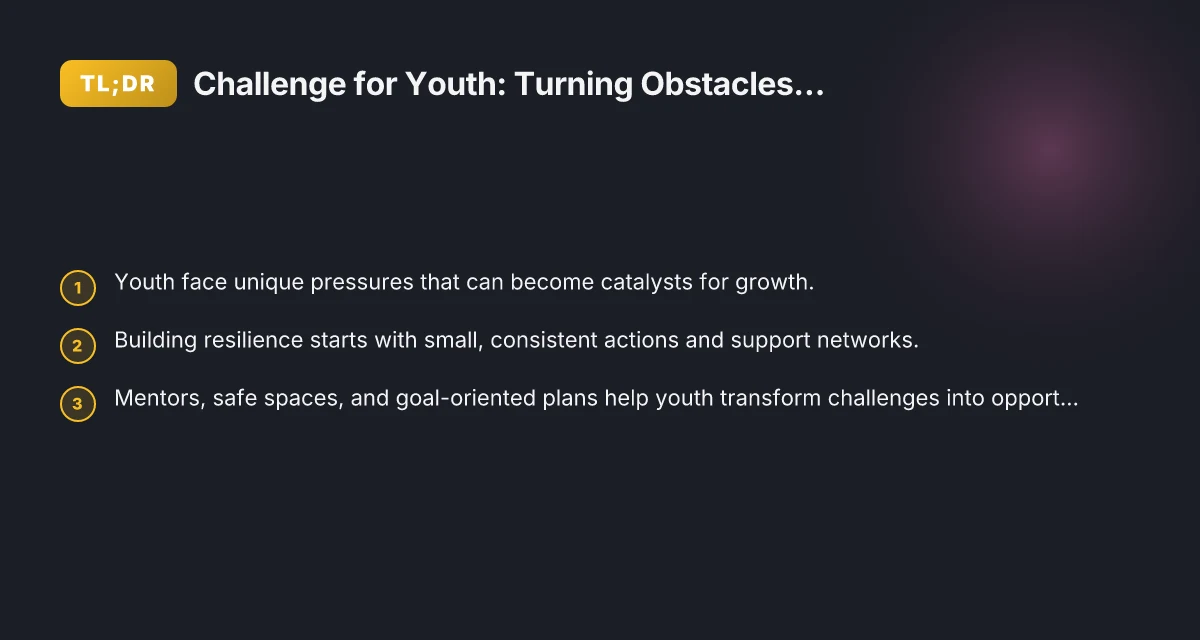
- For youth: practice daily micro-habits, build a reliable support network, and pursue opportunities that align with interests and strengths.
- For caregivers and mentors: listen more than you speak, provide resources, and help youth transform setbacks into learning milestones.
- For educators and program designers: design curricula and activities that blend skill-building with real-world relevance. Measure outcomes beyond grades, including resilience, collaboration, and problem-solving.
In summary, a challenge for youth is not just an obstacle to endure but a doorway to growth. By building resilience, seeking support, setting concrete goals, and engaging with mentors and peers, young people can transform difficulty into capability, confidence, and opportunity. The key is proactive, compassionate action rooted in real-world practice, not just theoretical advice. If you want a tailored plan for a specific situation, academic stress, social anxiety, or career exploration, share details and I’ll help craft a practical, step-by-step approach.