Greater West Belfast Community Association: A Local Anchor for Social Change and Community Welfare
A detailed overview of Greater West Belfast Community Association, its mission, programs, and impact on the local community.
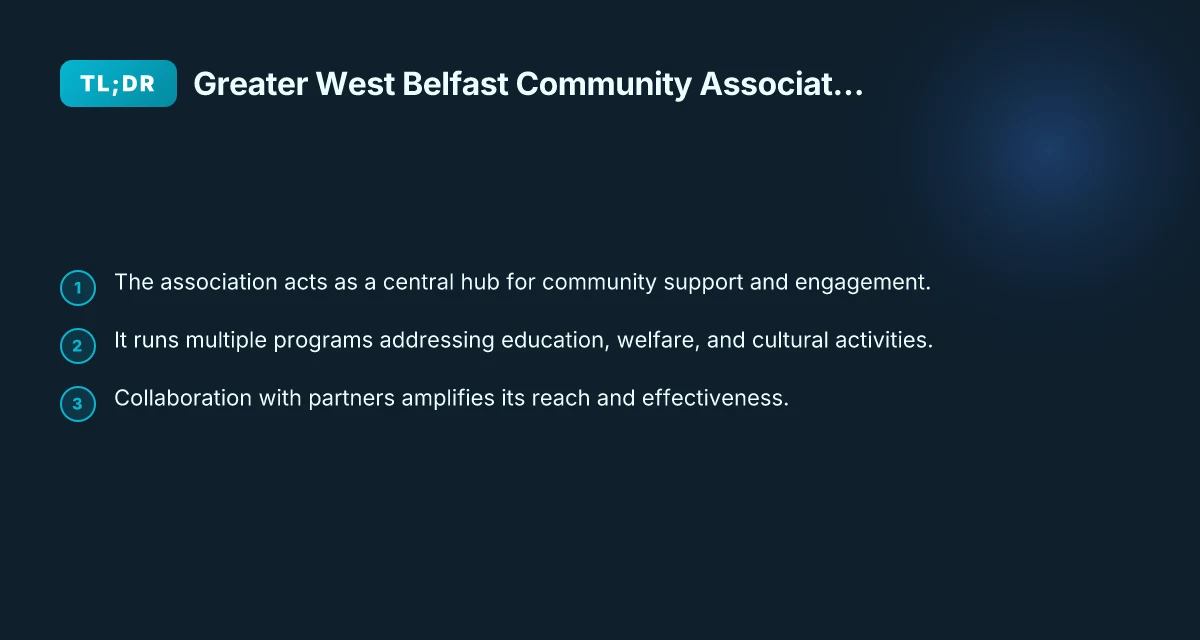
Greater West Belfast Community Association (GWBCA) stands as a key community-led organization in West Belfast, focusing on social welfare, education, and cultural wellbeing. It operates at the intersection of local need and collaborative action, bringing residents together to improve daily life, create opportunities, and cultivate a sense of belonging. The association’s work is rooted in listening to community voices, translating needs into practical programs, and measuring impact to refine its approach over time. This article provides a clear portrait of GWBCA, its core programs, how it partners with others, and what residents might expect if they engage with or support the organization.
What is Greater West Belfast Community Association?
Mission and purpose
GWBCA exists to strengthen communities by delivering services, fostering inclusion, and enabling participation in civic life. Its mission commonly includes:
- Alleviating poverty and social isolation
- Providing access to education and training
- Supporting families and young people
- Encouraging cultural expression and community pride
- Facilitating collaboration among residents, voluntary groups, schools, and local businesses
History and roots
The association has grown from grassroots community development efforts in West Belfast, evolving into a structured NGO-style entity that coordinates resources, volunteers, and partnerships. Its trajectory often mirrors broader neighborhood renewal trends, mixing practical service delivery with advocacy for local needs.
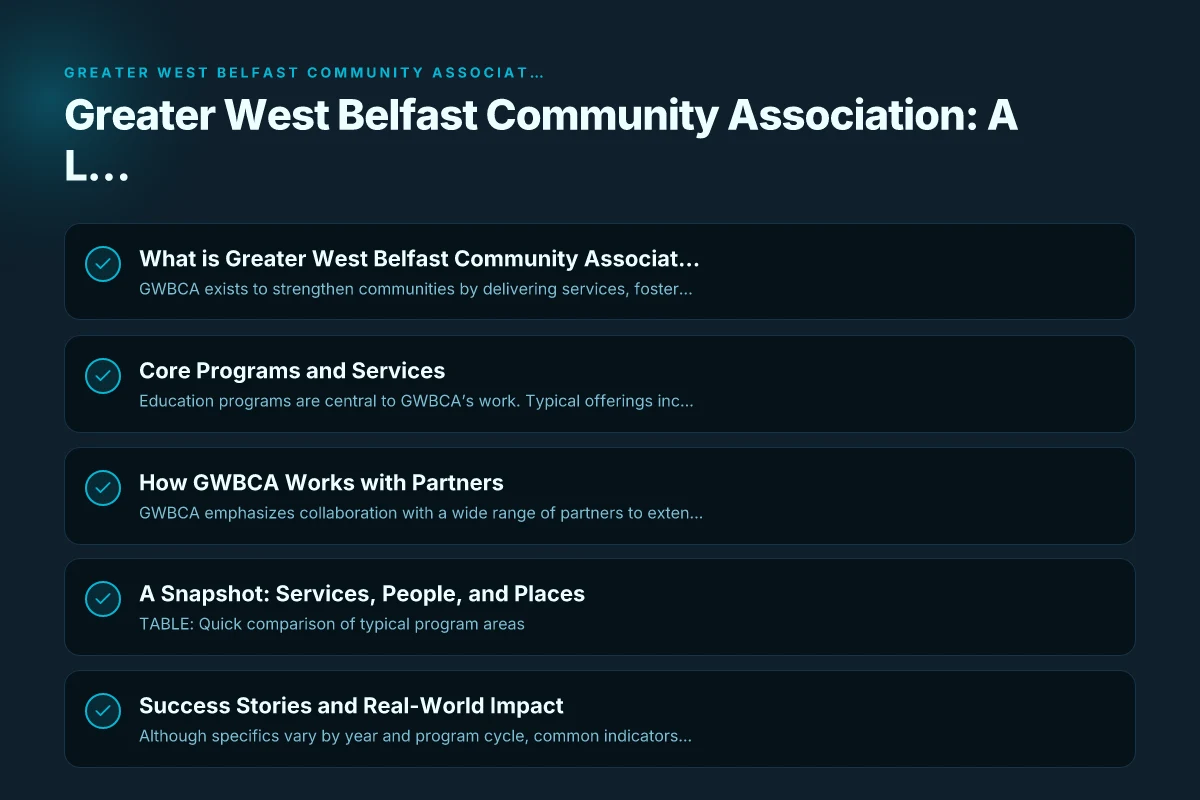
Core Programs and Services
Education and skills
Education programs are central to GWBCA’s work. Typical offerings include:
- Adult literacy and numeracy courses
- ICT and digital literacy classes
- Employability and job-search workshops
- Youth mentorship and homework clubs
Welfare and support
Welfare services aim to ease immediate pressures and build resilience: West Belfast Community Directory: A Practical Guide to Local Help, Resources, and Services
- Food aid schemes or food banks
- Benefit rights advice and application help
- Housing and debt guidance
- Welfare checks or wellbeing phone campaigns for vulnerable residents
Community development and engagement
This pillar focuses on participation and empowerment:
- Community events, festivals, and cultural activities
- Neighbourhood cleanups, safety patrols, and environmental projects
- Residents’ associations and local forums
- Volunteer recruitment and capacity-building
Health and wellbeing
Health-oriented work addresses both physical and mental wellbeing:
- Community health evenings with information and screenings
- Mental health peer support groups
- Access to local clinics and social prescribing pathways
- Exercise and wellness programs in local venues
Children's and youth programs
Youth-focused initiatives nurture aspiration and safe spaces:
- After-school clubs and holiday schemes
- Sports, arts, and drama programs
- Leadership training and peer mentoring
- Substance abuse prevention and life-skills education
How GWBCA Works with Partners
Collaboration model
GWBCA emphasizes collaboration with a wide range of partners to extend reach and effectiveness. Typical partner types include: Glen Community Centre: A Complete Guide to Programs, Facilities, and How to Get Involved
- Local councils and public sector bodies
- Schools and early-years services
- Other NGOs and community groups
- Health boards or primary care networks
- Businesses and funders supporting community initiatives
Funding streams
Funding often comes from a mix of sources:
- Government and council grants
- European or UK-wide program funds
- Charitable trusts and foundations
- Corporate social responsibility contributions
- Community fundraisers and donor support
Impact and accountability
To maintain trust and effectiveness, GWBCA usually emphasizes:
- Transparent reporting on activities and outcomes
- Regular community feedback and consultation
- Independent evaluations or third-party audits
- Clear governance structures with volunteer and staff roles defined
A Snapshot: Services, People, and Places
TABLE: Quick comparison of typical program areas | Program Area | Target Beneficiaries | Typical Activities | Measures of Success | | Education and skills | Adults and young people seeking work or progression | Courses, workshops, tutoring | Numbers trained, job placements, exam outcomes | | Welfare and support | Low-income families, vulnerable individuals | Food aid, benefits advice, housing help | Benefit uptake, reduced debt, improved wellbeing | | Community engagement | All residents, particularly newcomers | Events, forums, volunteering, neighbourhood projects | Participation rates, community satisfaction, volunteer hours | | Health and wellbeing | General population with focus on mental health | Screenings, peer support, fitness programs | Attendance, health outcomes, self-reported wellbeing |
Success Stories and Real-World Impact
Examples from the field
Although specifics vary by year and program cycle, common indicators of success include: Euro Children: Understanding the European Approach to Child Welfare, Education, and Rights
- Increased school attendance or progression among youth involved in programs
- Improved digital inclusion metrics, such as more residents using online services
- Increased volunteer engagement, with sustained participation across quarters
- Better access to welfare entitlements, leading to reduced financial stress
Community-level outcomes
Beyond individual gains, GWBCA often contributes to neighborhood-level improvements:
- Heightened sense of safety and belonging
- Stronger networks among families, schools, and local services
- Cultural revitalization through festivals, arts projects, and storytelling
- Enhanced access to healthcare and preventative services
How Residents Can Get Involved
Volunteer opportunities
Volunteering remains a core engine of impact. Opportunities commonly include:
- Helping in learning and tutoring programs
- Assisting at food banks or welfare outreach
- Supporting events and community festivals
- Providing admin support or help with digital initiatives
Participating in programs
Residents can engage through:
- Enrolling in courses or training sessions
- Attending community meetings or forums
- Joining youth or senior clubs
- Participating in health and wellbeing activities
Getting support
If you or someone you know could benefit from GWBCA’s services, steps usually involve: Falls Community Festival: Your Guide to the Year’s Biggest Local Celebration
- Contacting the organization via phone or email
- Visiting a local community hub or one of the program sites
- Booking an appointment for welfare advice or a needs assessment
- Checking social media or the website for event calendars
How to Support or Partner with Greater West Belfast Community Association
Ways to contribute
Support can take many forms:
- Donations or sponsorship of programs and events
- In-kind gifts such as equipment or facilities
- Volunteer time and mentoring
- Sharing expertise from businesses or professional networks
How to initiate partnership
Organizations interested in partnering typically go through:
- An initial outreach meeting to align goals and capacities
- A transparent proposal detailing activities, timelines, and budgets
- A formal agreement outlining roles, responsibilities, and reporting
- Ongoing communication and joint evaluation of outcomes
Why partnership matters
Collaboration expands resources, reduces duplication, and amplifies impact. For West Belfast, strong partnerships help sustain social programs through shifts in funding, policy changes, or community needs.
The Final Word: A Recommendation for Practitioners and Residents
Greater West Belfast Community Association serves as a vital hub for community welfare, education, and cultural life. Its mixed model of direct service delivery, volunteer mobilization, and cross-sector partnership makes it well-positioned to respond to evolving local needs. For residents, engaging with GWBCA, whether as a learner, a volunteer, or a partner, offers a pathway to greater opportunity, stronger community ties, and better wellbeing. For funders and partner organizations, the association provides a collaborative platform with demonstrated local reach and ongoing accountability. If you are looking to support or participate in community life in Greater West Belfast, GWBCA should be high on your radar as a trusted, impact-focused organization with deep local roots and a broad portfolio of programs. Divis Residents Association: A Practical Guide to Community Living and Local Involvement