Help for Candidates

Practical guidance and resources to support candidates through campaigns, elections, and civic engagement.
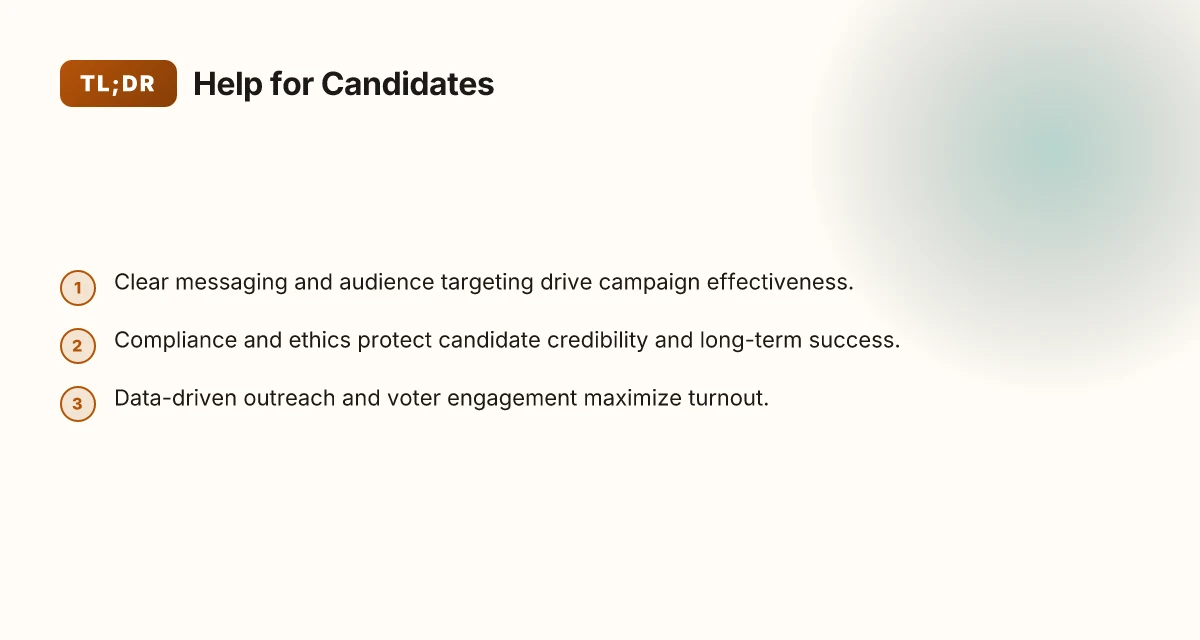
The path to political candidacy can feel daunting, whether you’re running for local office for the first time or seeking a higher seat. This guide lays out concrete steps, practical resources, and best practices to help candidates prepare, run a compliant campaign, and engage voters meaningfully. The focus is on actionable actions you can start today, plus tips for staying organized and energized throughout the process.
Table 1 — Understanding the basics: candidate roles, responsibilities, and legal bounds
| Topic | Candidate role | Responsibility scope | Legal bounds | Notes |
|---|---|---|---|---|
| Who is a candidate? | Public figure running for office | Campaign designates candidate | Subject to election law | |
| Primary duties | Represent voters; disclose finances | Platform development; fundraising | Compliance required | |
| Key constraints | Time, funds, signals | Communication limits | Disclosure rules | |
| Decision points | Run, pause, or exit | Resource allocation | Legal deadlines | |
| Essential disclosures | Identity, purpose | Timeline of actions | Filing requirements | |
| Common risks | Misrepresentation | Improper use of funds | Penalties possible |
Compiled November 2026; check the provider's site for current details.
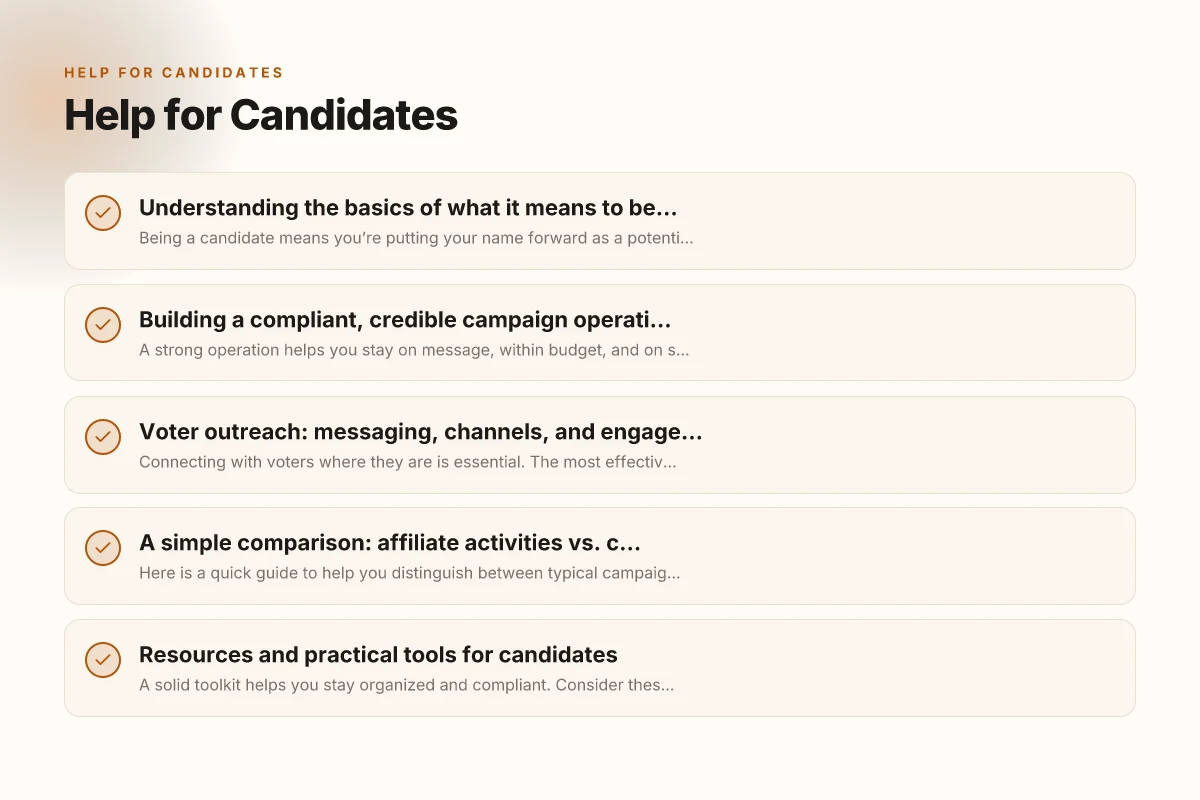
Understanding the basics of what it means to be a candidate
Being a candidate means you’re putting your name forward as a potential public official and committing to a campaign that informs, persuades, and mobilizes voters. Key realities to grasp early:
- Roles and responsibilities: You’ll need a clear platform, a campaign plan, and a team to handle outreach, finance, communications, and operations.
- Legal framework: Campaign finance laws, disclosure requirements, and election deadlines vary by jurisdiction. You must understand contribution limits, reporting timelines, and signage regulations.
- Time management: Campaigns demand a significant time investment. Balancing your professional and personal life while staying accessible to voters is essential.
- Ethical conduct: Transparency about your positions, funding sources, and conflicts of interest builds trust with voters.
Practical starter steps:
- Define your core message in 20–40 seconds and a longer, 3-minute version for conversations.
- Audit your digital presence: ensure bios, photos, and links are up to date and aligned with your platform.
- Set up a simple project tracker to manage tasks, deadlines, and responsibilities.
Building a compliant, credible campaign operation
A strong operation helps you stay on message, within budget, and on schedule. Core components include planning, finance, compliance, and field operations.
Campaign plan and messaging
- Start with a concise campaign plan that outlines goals, target audiences, key messages, and channels.
- Create multiple message tiers: elevator pitch, issue-focused talking points, and responses to common questions or criticisms.
- Prepare a rapid-response protocol for breaking news or misstatements, ensuring you respond promptly and accurately.
Finance and fundraising
- Open a compliant campaign fund and designate a treasurer with knowledge of local reporting requirements.
- Track money in and money out with receipts, and maintain regular reporting schedules.
- Diversify fundraising while avoiding disallowed sources. Understand contribution limits and donor eligibility.
- Plan for in-kind contributions (volunteers, services) and how to value them for reports.
Compliance and risk management
- Know your jurisdiction’s election laws, contribution limits, reporting deadlines, and advertising disclosures.
- Maintain a conflict-of-interest policy and a code of ethics for staff and volunteers.
- Implement data privacy practices for donor and supporter information.
- Establish crisis communications and fact-checking processes to handle misinformation quickly.
Field and outreach operations
- Build a volunteer network and a simple volunteer handbook outlining roles, schedules, and codes of conduct.
- Create a canvassing plan that respects privacy, consent, and safety considerations.
- Use a voter contact cadence that balances in-person outreach, phone/text outreach, and digital communications.
Voter outreach: messaging, channels, and engagement
Connecting with voters where they are is essential. The most effective campaigns blend authentic storytelling with practical information. Information on the Awards
Audience and message mapping
- Identify core voter groups (e.g., parents, small business owners, seniors, students) and what matters to them.
- Align your issues with concrete benefits: security, jobs, education, healthcare, or local infrastructure.
- Develop tailored messages for each audience while preserving a consistent overall narrative.
Channel strategy
- Earned media: local press, op-eds, community forums.
- Owned media: campaign website, newsletters, social media profiles.
- Paid media: targeted ads, boosted posts, and respectful outreach that complies with local rules.
- Events: town halls, meet-and-greets, and issue-focused forums to demonstrate accessibility.
Digital outreach best practices
- Keep messaging concise, scannable, and action-oriented (e.g., “Join us,” “Volunteer,” “Donate”).
- Use accessible design: readable fonts, alt text for images, and captions for videos.
- Respond to questions respectfully and promptly. Acknowledge valid concerns even when you disagree.
Canvassing and voter contact etiquette
- Obtain consent before sharing information or asking questions at the doorstep or via phone.
- Respect privacy and personal boundaries. Offer opt-out options.
- Document interactions to tailor follow-up and track sentiment changes.
Table 2 — Building a compliant, credible campaign operation: structure, processes, controls
| Area | Structure | Process | Control | Compliance cue | Assessment metric |
|---|---|---|---|---|---|
| Governance | Steering committee | Approvals for spend | Dual-signature required | Clear roles | Audit trail completeness |
| Financials | Treasurer role | Monthly reconciliations | Segregation of duties | Timely reports | Budget variance |
| Communications | Brand guidelines | Messaging review | Pre-approval for claims | Truthfulness check | Incident log |
| Data handling | Data steward | Data access controls | Least privilege | Data retention policy | Access violations |
| Vendor management | Procurement lead | Contract review | Compliance checklist | Vendor screen | On-time onboarding |
| Fundraising | Campaign finance lead | Compliance training | Donation reporting | Public disclosure | Filing accuracy |
Compiled November 2026; check the provider's site for current details.
A simple comparison: affiliate activities vs. compliance requirements
Here is a quick guide to help you distinguish between typical campaign activities and the compliance considerations they trigger.
| Activity | Common Goal | Primary Compliance Considerations | Best Practice |
|---|---|---|---|
| Fundraising event | Raise money for the campaign | Track donors, verify eligibility, report contributions and in-kind gifts | Use a structured donor log, issue receipts, and file reports on time |
| Campaign advertisement | Persuade voters | Advertising disclosures, platform restrictions, media buy reporting | Include sponsor disclosures, maintain accurate ad records, monitor sponsor changes |
| Volunteer canvassing | Outreach and engagement | Work with volunteers ethically, record who did what, respect voter privacy | Volunteer agreements, clear roles, privacy training |
| Social media outreach | Build awareness | Platform rules, disclosure of political advertising, data usage limits | Follow platform policies, label sponsored posts, protect donor data |
| Direct mail | Inform and persuade | Address accuracy, disclosure of sponsors, costs, and dates | Verify voter lists, cite sources, track expenditures |
| Public event hosting | Community engagement | Accessibility, safety, inclusivity, permit requirements | Venue accessibility, safety plan, inclusive messages |
Resources and practical tools for candidates
A solid toolkit helps you stay organized and compliant. Consider these categories and examples when building your own setup. Northern Ireland Post Qualifying Education and Training Partnership
- Campaign management tools: project trackers, to-do lists, calendars, and document folders.
- Finance and compliance software: donation tracking, receipts, and reporting templates customized for your jurisdiction.
- Data protection: secure contact databases, password management, and access controls for team members.
- Communications templates: message drills, responses to common questions, and crisis communication scripts.
- Volunteer management: scheduling, training materials, and recognition plans.
Note: Always tailor tools to your local requirements. Campaign rules differ by country, state, province, and municipality. If in doubt, consult a qualified campaign lawyer or ethics advisor.
Table 3 — Voter outreach: messaging, channels, and engagement
| Channel | Audience focus | Message frame | Compliance check | Engagement style | Metrics to watch |
|---|---|---|---|---|---|
| Debates/Interviews | Broad electorate | Platform clarity | Non-deceptive | Respectful | Reach, sentiment |
| Social media | Supporters; public | Pillars + updates | Ad disclosures | Interactive | Engagement rate |
| Town halls | Local residents | Listening-first | Inclusive language | Q&A openness | Attendance, questions asked |
| Direct mail | Registered voters | Clear policy bullets | Opt-out options | Personal tone | Response rate |
| Email newsletters | Subscribers | Actionable asks | unsubscribe option | BCF (brief, clear, factual) | Open rate, CTR |
| Paid ads | Targeted segments | Specific claims | Sponsorship disclosures | Transparent | Spend vs. reach |
Compiled November 2026; check the provider's site for current details.
The candidate’s mindset: ethics, transparency, and resilience
Campaigns test you on many levels beyond policy knowledge. The strongest candidates maintain integrity, authenticity, and resilience. Advanced Award: Understanding, Choosing, and Maximizing the Prestige
- Transparency: be clear about who funds you, where you stand on issues, and how decisions are made.
- Accountability: acknowledge mistakes, correct misinformation quickly, and communicate updates.
- Respect: engage with supporters and opponents alike in a courteous, fact-based manner.
- Resilience: prepare for long hours, public scrutiny, and negative feedback with a support system and healthy routines.
Practical resilience strategies:
- Build a personal downtime plan: regular breaks, exercise, and time with loved ones.
- Leverage a support network of advisors, mentors, and peers.
- Create a crisis plan that outlines steps to verify facts, communicate updates, and minimize confusion.
A final, practical checklist for candidates
- Define your core message and gather supporting data and anecdotes.
- Learn the local election laws, reporting timelines, and contribution rules.
- Assemble a campaign team with defined roles: spokesperson, finance lead, field director, compliance officer.
- Set up a simple budgeting system and maintain receipts for all expenditures.
- Create a voter outreach plan with a realistic cadence and measurable goals.
- Prepare a digital landing page with clear calls to action and contact options.
- Develop a crisis response protocol and a media contact list.
- Schedule regular check-ins with your team to review progress and adjust plans.
- Keep your wellbeing and ethics front and center. Campaigns succeed when the candidate stays grounded.
Recommendation If you’re preparing to run, start with a focused, compliant plan that blends clear messaging with practical outreach. Build a small, capable team, invest in the right tools, and maintain transparent communications with voters and supporters. By aligning your actions with ethical standards, you’ll establish credibility that strengthens your campaign today and pays dividends in future public service.