volunteer development agency(2026)
Discover how a Volunteer Development Agency can design, recruit, train, and sustain impactful volunteer programs.
Volunteer Development Agency: A Practical Guide to Building Strong Volunteer Programs
Volunteer Development Agencies (VDAs) act as the nerve center for organizations that rely on volunteers. They help design roles, recruit candidates, train volunteers, and measure impact. Whether you’re a nonprofit, a school, a faith-based organization, or a community group, partnering with a VDA can streamline operations, elevate volunteer experience, and align volunteer activity with strategic goals. This guide covers what a VDA does, how to choose or establish one, and practical steps to maximize volunteer impact.
What a Volunteer Development Agency does
Core functions
- Program design: defining roles, responsibilities, and expectations for volunteers.
- Recruitment and onboarding: attracting diverse candidates and orienting them effectively.
- Training and development: offering initial training and ongoing learning opportunities.
- Support and supervision: providing mentors, coordinators, and regular check-ins.
- Evaluation and impact: tracking outcomes, collecting feedback, and reporting results.
- Governance and compliance: ensuring safety, ethics, and legal requirements are met.
Why it matters
- Consistency: standardized processes create reliable volunteer experiences.
- Sustainability: structured development reduces turnover and builds capacity.
- Alignment: volunteers’ work aligns with organizational strategy and outcomes.
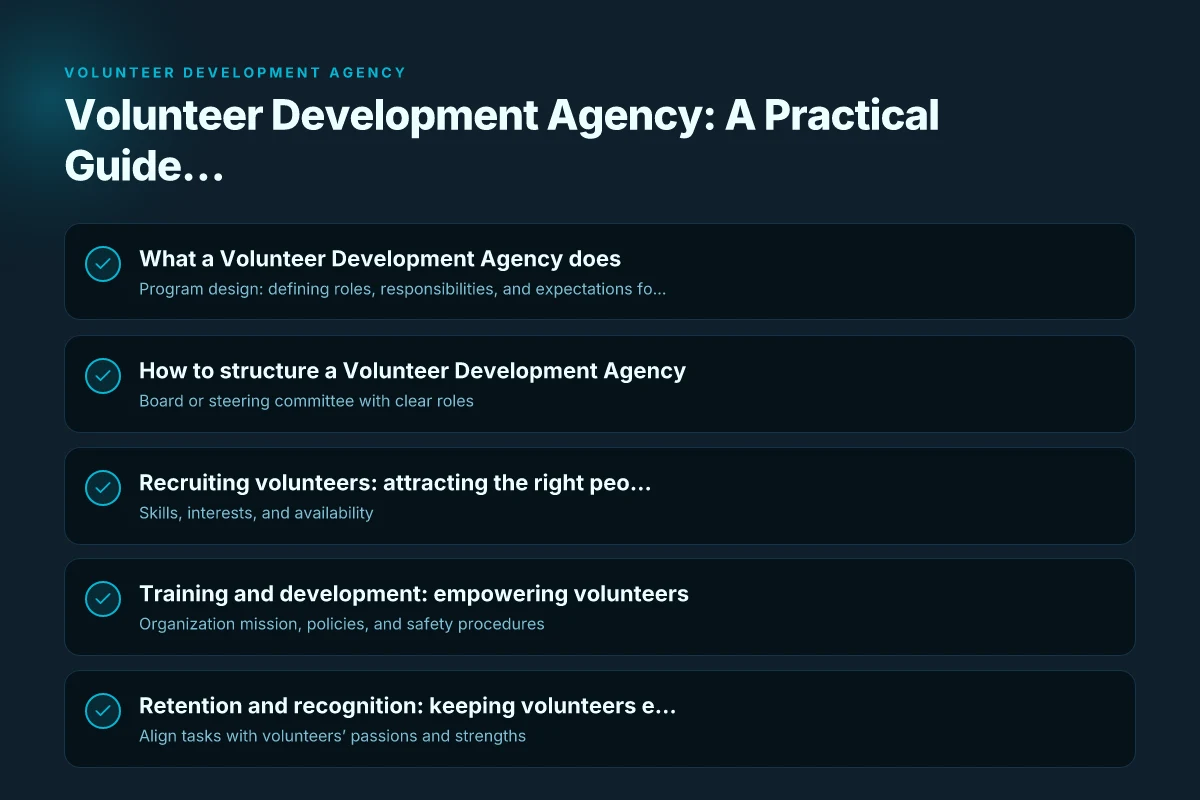
How to structure a Volunteer Development Agency
Governance and leadership
- Board or steering committee with clear roles
- Senior staff or coordinators dedicated to volunteer development
- Regular strategy reviews and performance metrics
Operations and processes
- Intake and screening procedures to match volunteers with roles
- Training calendar, from onboarding to advanced skills
- Supervision framework with regular feedback and recognition
Tools and systems
- Volunteer management software for tracking hours, skills, and placements
- Learning management system for training modules
- Communication channels (email, messaging apps, newsletters)
Staffing considerations
- A director or program manager with a clear mandate
- Field coordinators or mentors across programs
- A data and reporting role to monitor impact
Recruiting volunteers: attracting the right people
Defining the target profile
- Skills, interests, and availability
- Diversity and inclusion goals
- Safety and compliance considerations
Outreach channels
- Community centers, libraries, schools, and universities
- Social media campaigns and job boards
- Partner organizations and corporate volunteer programs
The recruitment workflow
- Application and screening
- Interviews or alignment conversations
- Background checks and orientations
- Placement in roles with clear expectations
Sample outreach checklist
- Promote flexible volunteering options
- Highlight impact stories and specific projects
- Clarify time commitments and expectations
- Provide a streamlined sign-up process
Training and development: empowering volunteers
Onboarding essentials
- Organization mission, policies, and safety procedures
- Role-specific training and expectations
- Buddy system or mentorship for early volunteering
Ongoing learning
- Skill-building workshops (communication, conflict resolution, data entry, etc.)
- Leadership pathways for seasoned volunteers
- Reflection and learning circles to share experiences
Supportive supervision
- Regular check-ins, feedback, and recognition
- Clear escalation paths for concerns
- Wellness and workload management
Measuring training impact
- Pre- and post-training assessments
- Application of skills in real projects
- Volunteer satisfaction surveys
Retention and recognition: keeping volunteers engaged
Meaningful roles and impact
- Align tasks with volunteers’ passions and strengths
- Provide tangible outcomes and visible impact updates
Recognition strategies
- Public acknowledgment, certificates, or awards
- Volunteer of the month programs and appreciation events
- Access to professional development and networking
Managing turnover
- Exit interviews to learn reasons for leaving
- Succession planning for roles with ongoing needs
- Building a connected community and sense of belonging
Measuring impact: data-driven improvement
Key metrics to track
- Number of active volunteers and retention rates
- Hours contributed and projects completed
- Outcomes achieved (e.g., meals served, tutoring sessions held)
- Volunteer satisfaction and learning outcomes
- Safety incidents and compliance adherence
A simple impact table
| Metric | Where to collect | Why it matters | Example target |
|---|---|---|---|
| Active volunteers | Volunteer management system | Gauge engagement | 150 volunteers by Q4 |
| Hours contributed | Time logs | Reflects effort and productivity | 5,000 hours annually |
| Projects completed | Project records | Measures output | 40 projects per quarter |
| Satisfaction score | Surveys | Indicates quality of experience | 4.5/5 average |
| Safety compliance | Training and checks | Ensures risk management | 100% up-to-date certifications |
Using data to improve
- Identify bottlenecks in recruitment or onboarding
- Tailor training to common gaps
- Reallocate volunteers to high-impact projects
- Report progress to funders and partners
Compliance, safety, and risk management
Policies every VDA should have
- Volunteer code of conduct and ethics policy
- Background check and safeguarding procedures (as applicable)
- Health and safety policies and incident reporting
- Data protection and privacy guidelines
- Equal opportunity and anti-harassment statements
Training for safety
- Mandatory safety briefings before placements
- Scenario-based drills for emergencies
- Clear escalation procedures for concerns
Partner and community considerations
- Respect for community norms and accessibility needs
- Inclusive practices to ensure broad participation
- Transparent partnerships with measurable expectations
Building a sustainable model: funding and partnerships
Funding options
- Government grants and public funding
- Private donations and foundation grants
- Corporate social responsibility (CSR) programs
- Program service fees for specialized training (where appropriate)
Partnerships that amplify impact
- Schools, universities, and youth organizations
- Local businesses for employee volunteering
- Other nonprofits for shared services and co-delivered programs
Budgeting essentials
- Personnel costs for coordinators and trainers
- Software, licenses, and venue costs
- Training materials, background checks, and safety compliance
- Evaluation and reporting expenses
The decision: should you build or partner with a VDA?
| Option | Pros | Cons |
|---|---|---|
| Build your own Volunteer Development Agency | Full control over programs; tailored to your mission; deep alignment with strategy | Requires funding, staff, and time; governance complexity; longer startup period |
| Partner with an established VDA | Faster to deploy; access to expertise; shared administrative load | Higher ongoing costs; potential misalignment with unique culture; dependency on partner |
- If you have a steady funding stream and a clear, long-term volunteer need, building internal capacity can pay off in the long run.
- If your organization is new to volunteering, or you need rapid scaling, partnering with an experienced VDA can deliver faster impact.
The final section: recommendation
For most organizations, the most practical path is to start with a partnership with a Volunteer Development Agency to establish robust foundations, recruitment, onboarding, training, and measurement, while you gradually build internal capacity. A phased approach lets you learn best practices, refine roles, and align with your mission without overextending your resources.
Key steps to begin today:
- Define your volunteer goals and how you’ll measure success.
- Identify a VDA partner with experience in your sector and community context.
- Map out a basic volunteer pipeline: onboarding, initial training, placements, and supervision.
- Create a simple data plan to track hours, impact, and satisfaction.
- Establish recognition mechanisms to boost morale and retention.
By leveraging a VDA’s expertise, your organization can provide meaningful volunteer experiences, achieve tangible impact, and establish sustainable programs that endure beyond funding cycles. As you grow, gradually take on more governance and capacity-building tasks to ensure your volunteer program remains aligned with your mission and resilient to change.