Cancer Control: Practical Strategies for Prevention, Early Detection, and Management
A practical guide to cancer control, covering prevention, screening, treatment options, survivorship, and policy approaches.
Cancer control is a multi-faceted approach that combines prevention, early detection, treatment, survivorship, and public health policy. It aims to reduce the burden of cancer on individuals and communities by lowering incidence, improving survival, and enhancing quality of life. This article provides a practical overview of how to control cancer across different stages and settings, with actionable steps you can take today.
Prevention options and impact
| Approach | Primary focus | Typical impact | Key considerations |
|---|---|---|---|
| Vaccination | Prevent virus-related cancers | High to moderate | Safe, evidence-based, access varies |
| Lifestyle changes | Lower overall risk | Moderate | Sustainability matters, behavior support |
| Diet adjustments | Reduce guidance-based risk | Variable | Evidence mixed, practical tips |
| Sun safety | Skin cancer prevention | Moderate | Regular protection, checkups advised |
| Environmental risk reduction | Lower carcinogen exposure | Variable | Workplace/home measures recommended |
Compiled November 2026; check the provider's site for current details.
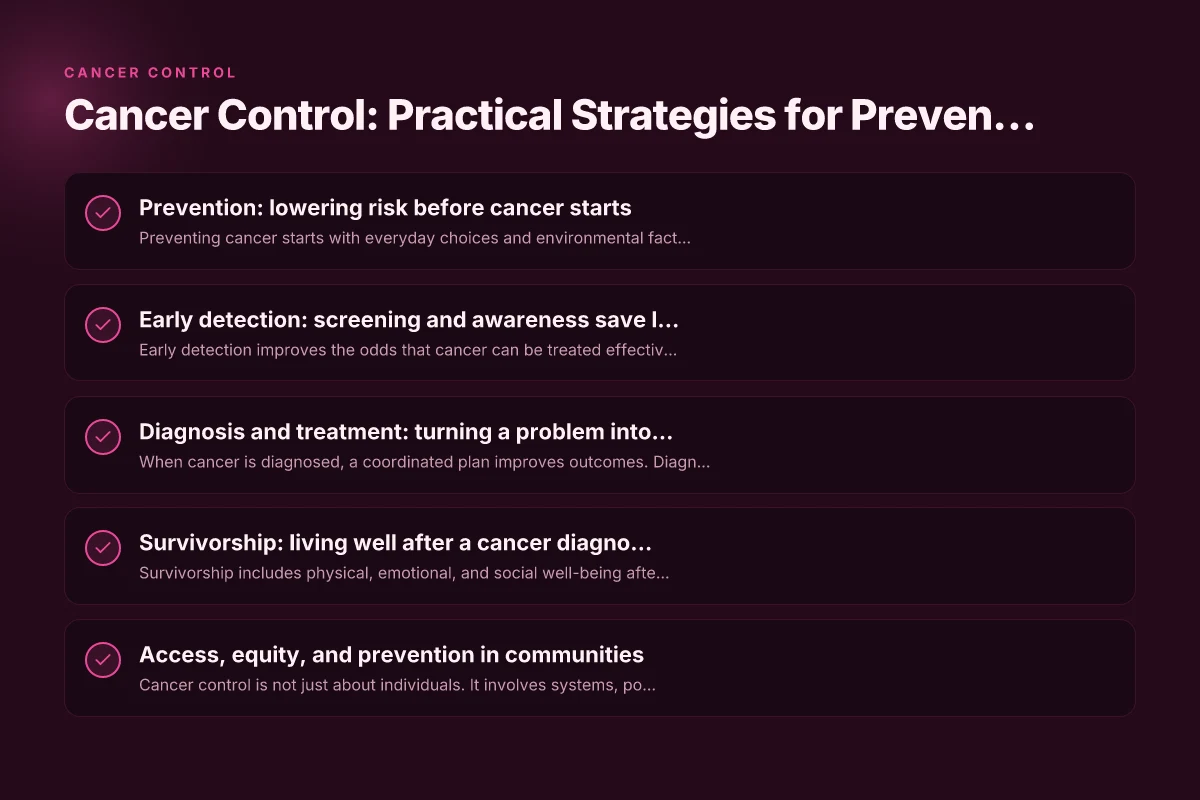
Prevention: lowering risk before cancer starts
Preventing cancer starts with everyday choices and environmental factors. Not every cancer can be prevented. Many forms are linked to modifiable risks.
- Tobacco and nicotine: Avoiding smoking, vaping, and exposure to secondhand smoke sharply reduces risks for lung, throat, mouth, and several other cancers.
- Diet and weight: A balanced diet rich in fruits, vegetables, whole grains, and lean proteins, combined with maintaining a healthy weight, lowers cancer risk. Limit processed meats and highly salted, smoked, or preserved foods.
- Physical activity: Regular exercise (at least 150 minutes of moderate activity per week, plus strength training) helps manage weight and reduces risk for several cancers.
- Alcohol: If you drink, do so in moderation. Less alcohol means lower risk for cancers of the liver, breast, colon, and others.
- Sun and environmental exposures: Use sun protection, avoid tanning beds, and limit exposure to industrial and environmental carcinogens when possible (and follow safety guidelines at work).
- Vaccination: Vaccines, such as those for human papillomavirus (HPV) and hepatitis B, prevent infections that can lead to cancer.
- Health equity: Social determinants of health influence cancer risk and outcomes. Community programs that address access to healthy foods, safe environments, and healthcare help reduce disparities.
Early detection: screening and awareness save lives
Early detection improves the odds that cancer can be treated effectively. Screening programs look for cancers before symptoms appear.
- What to screen for: Commonly screened cancers include breast, cervical, colorectal, prostate (where appropriate), and lung in high-risk groups. Talk with a clinician about what tests are recommended for your age, sex, and risk factors.
- How screening works: Screens are non-invasive or minimally invasive tests designed to catch abnormalities that may indicate cancer. They often detect cancer at a stage when treatment is more effective.
- When to start: Age-to-risk guidance varies by country and health system. Some risks are hereditary or based on lifestyle. Family history may prompt earlier or more frequent screening.
- What to expect: A screening result does not diagnose cancer. If a screening test is abnormal, follow-up diagnostic tests are needed to determine whether cancer is present.
- Benefits and limits: Screening can reduce cancer deaths in certain populations, but false positives and overdiagnosis can occur. Shared decision-making with a clinician helps balance benefits and harms.
Table: Common Cancer Screenings (general guidance. Follow local guidelines) | Cancer type | Typical starting age | Frequency (example) | Key notes | | Breast | 40–50+ depending on guidelines | Every 1–2 years (mammography) | Consider risk factors and family history | | Cervical | 21–65 | Every 3–5 years (Pap, HPV co-testing) | Vaccination status may influence risk profile | | Colorectal | 45–50+ | Every 10 years (colonoscopy) or alternative tests | Adenoma detection reduces risk; discuss options | | Prostate | Shared decision-making after 50 or earlier if high risk | Varied; PSA with digital rectal exam in some guidelines | Benefits vs potential harms debated | | Lung | High-risk individuals (age and smoking history) | Annual low-dose CT for selected groups | Not for general population; discuss eligibility |
Early detection strategies comparison Sun Wise: A Practical Guide to Safe and Sustainable Sun Exposure
| Strategy | Target population | Screening tests | Notable benefits | Barriers | Recommended frequency |
|---|---|---|---|---|---|
| Mammography | Women, age guidelines | Imaging | Early detection, better outcomes | Access, cost | As advised by guidelines |
| Colonoscopy | Adults at risk | Endoscopy | Polyp removal, cancer prevention | Invasiveness, prep | Usually every 10 years |
| Pap/HPV testing | Women | Cervical cell tests | Detects precancers | Follow-up needed | As per guidelines |
| Low-dose CT | High-risk smokers | CT imaging | Lung cancer detection | Radiation, cost | Annually or per risk |
| PSA testing | Men at risk | Blood test | Detects prostate issues | Overdiagnosis risk | Discuss with clinician |
Compiled November 2026; check the provider's site for current details.
Diagnosis and treatment: turning a problem into a plan
When cancer is diagnosed, a coordinated plan improves outcomes. Diagnosis involves confirming the cancer type, stage, and molecular features, which guide treatment.
- Multidisciplinary care: Teams may include medical oncologists, surgeons, radiation oncologists, pathologists, radiologists, nurses, social workers, and palliative care specialists. Integrated care improves decision-making and patient experience.
- Treatment options:
- Surgery: Remains a cornerstone for many solid tumors to remove cancer and nearby tissue.
- Radiation therapy: Uses targeted energy to destroy cancer cells or shrink tumors, often before or after surgery or when surgery isn’t feasible.
- Systemic therapy: Chemotherapy, targeted therapy, immunotherapy, and hormone therapy affect cancer cells throughout the body and are tailored to tumor biology.
- Participation in clinical trials: Trials offer access to new therapies and contribute to advancing cancer care.
- Personalization: Treatments increasingly rely on tumor genetics, biomarkers, and patient health. Personalized medicine aims to maximize effectiveness while minimizing side effects.
- Side effects management: Proactive supportive care, nutrition, exercise, psychosocial support, appetite management, and symptom control, helps patients tolerate treatment and maintain quality of life.
Survivorship: living well after a cancer diagnosis
Survivorship includes physical, emotional, and social well-being after treatment. It is a critical phase of cancer control.
- Follow-up care: Regular check-ins monitor for recurrence, manage late effects of treatment, and support ongoing health maintenance.
- Rehabilitation: Physical therapy, occupational therapy, and speech therapy help recover function after surgery or therapy.
- Mental health: Coping with anxiety, fear of recurrence, and changes in identity or relationships is common. Counseling and support groups can be very beneficial.
- Healthy lifestyle after treatment: Maintaining healthy weight, staying active, balanced nutrition, abstaining from tobacco, and adhering to recommended screenings are important.
- Fertility and family planning: Some people experience changes in fertility. Counseling and preservation options may be relevant before treatment.
Access, equity, and prevention in communities
Cancer control is not just about individuals. It involves systems, policies, and community strategies. Booklets: A Practical Guide to Small, Powerful Print Materials
- Health systems: Access to screening, diagnostic tests, and high-quality treatment is essential. This includes reducing wait times, ensuring affordability, and coordinating care.
- Policy and funding: Public health campaigns, vaccination programs, and cancer control plans align resources with evidence-based strategies.
- Community programs: Local education, mobile screening clinics, and culturally appropriate outreach help reach underserved populations.
- Data and accountability: Tracking incidence, stage at diagnosis, treatment patterns, and outcomes enables continuous improvement.
Practical steps for patients today
| Area | Action | What to do | Expected benefit | Barriers | Resources |
|---|---|---|---|---|---|
| Personal risk awareness | Know family history | List relatives with cancer | Focused screening | Time, awareness | Family history worksheet |
| Daily habits | Quit smoking, limit alcohol | Use cessation aids | Lower risk | Cravings | Quitline, apps |
| Physical activity | Move more | 150 minutes/week + | Better health, weight | Time, motivation | Activity trackers |
| Diet | Eat plants, reduce processed foods | Add veggies/fruits | Nutritional benefits | Access, cost | Nutrition guidance |
| Screening access | Schedule tests | Book appointments | Early detection | Insurance, wait times | Clinic finder |
Compiled November 2026; check the provider's site for current details.
Practical steps you can take today
- Talk to your doctor about your risk factors and the screening schedule that fits you.
- Adopt a healthier lifestyle: move more, eat a plant-forward diet, limit processed foods, avoid tobacco, and moderate alcohol.
- Stay informed about vaccinations that prevent cancer-causing infections.
- If diagnosed, seek a second opinion and ask for a care plan that includes goals, timelines, and potential side effects.
- Explore support networks: patient advocates, social workers, and survivorship programs can offer practical and emotional support.
A quick guide to talking with your healthcare team
- Prepare a list of questions before visits: What is the type and stage of the cancer? What are the treatment goals? What are the benefits and risks? Are there clinical trials relevant to me?
- Clarify the plan: Ask for a written treatment plan, expected timeline, and what tests will be needed.
- Discuss side effects: What symptoms should prompt contact with the team? What supportive care is available?
- Consider quality of life: How will treatment affect daily activities, work, and family plans? Are there palliative options if needed?
Final recommendation: integrate prevention, detection, and care for lasting impact
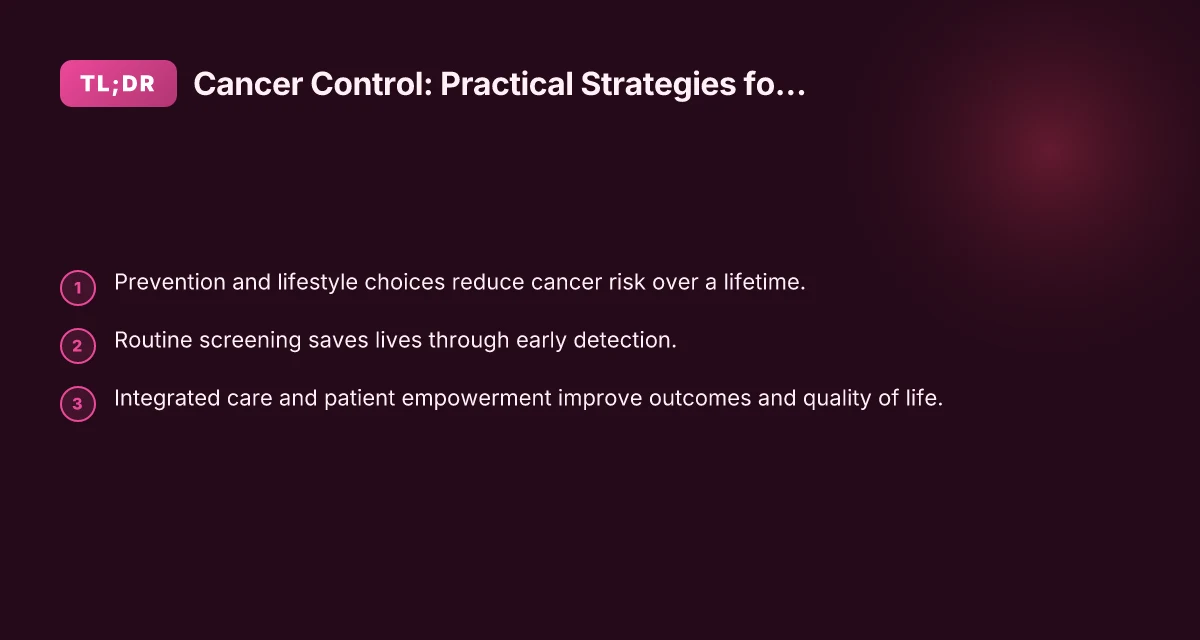
Cancer control succeeds when prevention, early detection, effective treatment, survivorship, and equitable access work together. For individuals, this means proactive risk reduction, staying informed about screening, engaging with multidisciplinary care teams, and leveraging supportive services. For communities, it means building accessible screening programs, reducing disparities, and funding evidence-based interventions. For health systems and policymakers, it means committing to data-driven, patient-centered care that continuously improves outcomes.
If you’re seeking a starting point, begin with a personal risk assessment and a conversation about screening eligibility with your primary care provider. From there, map a practical plan that fits your life, one that emphasizes prevention, timely detection, thoughtful treatment choices when necessary, and sustained support through survivorship. Cancer control is most powerful when it’s proactive, collaborative, and grounded in patient-centered care. Networks: A Practical Guide to Understanding Modern Connectivity