Sun Wise: A Practical Guide to Safe and Sustainable Sun Exposure
Learn how to enjoy the sun safely, protect your skin, and embrace sun-smart habits for health and the environment.
The sun is essential for life and well-being, but unprotected or excessive exposure can increase the risk of skin cancer, premature aging, and eye damage. Sun Wise is a practical approach to enjoying the sun safely, maximizing health benefits such as mood and vitamin D, while minimizing risks. This article provides clear steps, checks, and everyday routines you can adopt to stay sun-smart.
Sun protection options comparison
| Option | SPF/UPF rating | Coverage | Reapplication frequency | Water resistance | Notes |
|---|---|---|---|---|---|
| Sunscreen lotion | SPF 30–50 | Full body coverage | Every 2 hours | Usually water resistant 40–80 min | Broad spectrum advised |
| Sunscreen spray | SPF 30–50 | Easy on, risk of missed spots | Every 2 hours | Water resistant option | Apply to cool dry skin |
| Sun hat | N/A | Head/face protection | N/A | N/A | Wide brim best |
| UV protective clothing | UPF 30–50+ | Upper body coverage | N/A | N/A | Lightweight fabrics |
| Sunglasses | N/A | Eye protection | N/A | N/A | 100% UV-A/B blocking recommended |
Compiled November 2026; check the provider's site for current details.
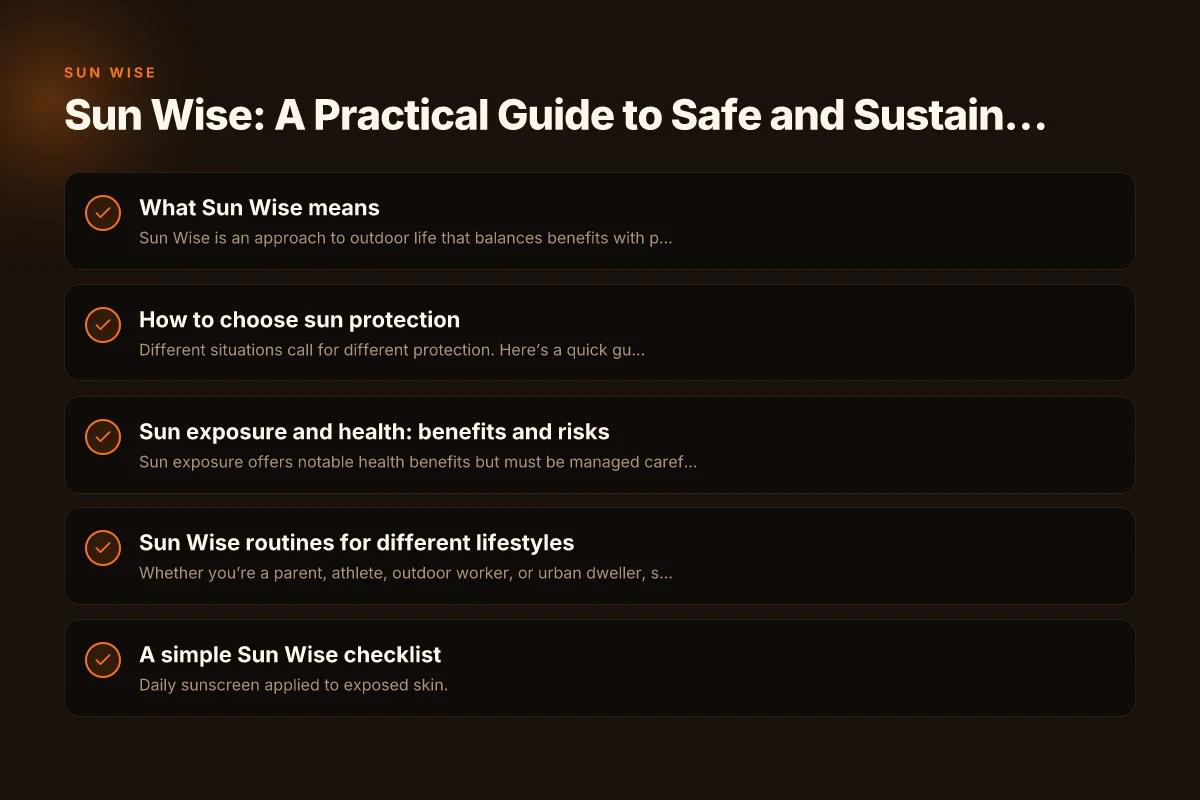
What Sun Wise means
Sun Wise is an approach to outdoor life that balances benefits with protection. It centers on three pillars:
- Protection: shielding skin and eyes from harmful UV rays.
- Awareness: understanding UV index, weather, and personal skin type.
- Balance: enjoying moderate sun exposure to reap benefits without overdoing it.
By combining these pillars, you can still participate in outdoor activities, sports, or simply soaking up sunshine for mood and circadian rhythm without compromising safety.
Key components of a Sun Wise routine
- Daily sunscreen: broad-spectrum SPF 30 or higher for most people, more for those with very fair skin.
- Protective clothing: hats, sunglasses, long sleeves, and UPF-rated fabrics when appropriate.
- Shade and timing: seek shade during peak UV hours, typically 10 a.m.–4 p.m., and plan outdoor activities around these windows.
- Regular skin checks: monitor for new or changing moles and spots, and see a clinician if you notice anything suspicious.
How to choose sun protection
Different situations call for different protection. Here’s a quick guide to help you pick the right mix.
Sunscreen choices
- Broad-spectrum: protects against UVA and UVB rays.
- SPF 30+ is a common baseline; SPF 50+ for very fair or high-risk skin.
- Water resistance: look for “water resistant” labels if you’ll sweat or swim.
- Application tips: apply 15–30 minutes before sun exposure, reapply every two hours, or after swimming or sweating.
Clothing and accessories
- Sun-protective clothing: garments with a UPF rating offer consistent protection.
- Hats: wide-brimmed (at least 3 inches) to shade face, ears, and neck.
- Sunglasses: 100% UV protection, wraparound or close-fitting styles protect eyes on all sides.
Shade and environment
- Seek shade under trees, canopies, or UV-protective umbrellas.
- Build routines that favor mornings or late afternoons when UV is lower.
Lifestyle routines and sun protection Booklets: A Practical Guide to Small, Powerful Print Materials
| Routine | Morning prep | Day activity | Peak sun protection | After sun care | Notes |
|---|---|---|---|---|---|
| Work indoors | Light cover, sunscreen optional | Minimal outdoor time | Hats or clothing if outdoors | Hydration | Breaks for shade if outside |
| Outdoor exercise | Sunscreen applied early | Frequent outdoor time | Sun-safe clothing | After-sun moisturizer | Hydration priority |
| Family beach day | Sunscreen + hats | Prolonged sun exposure | Shade breaks | Aloe or moisturizer | Reapply often |
| Commuting sunny days | Sunscreen to face, neck | Short outdoor spells | Sunglasses | Cool-down | SPF higher for long exposure |
| Hiking | Long sleeves optional | Trails, high sun | UPF clothing | Hydration & shade | Pack multiple options |
Compiled November 2026; check the provider's site for current details.
Sun exposure and health: benefits and risks
Sun exposure offers notable health benefits but must be managed carefully.
Benefits
- Vitamin D: essential for bone health, immune function, and mood.
- Circadian rhythm: natural light helps regulate sleep-wake cycles.
- Mood and performance: sunlight can boost mood and energy levels, with practical benefits for outdoor work or sports.
Risks and how to mitigate them
- Skin cancer risk: cumulative UV exposure increases risk over time.
- Skin aging: UV exposure accelerates wrinkles and age spots.
- Eye damage: UV light can harm eyes. Protective eyewear is important.
- Mitigation: limit peak-hour exposure, use sunscreen, and wear protective gear.
Sun Wise routines for different lifestyles
Whether you’re a parent, athlete, outdoor worker, or urban dweller, small changes add up.
For families
- Create a shade plan for backyard play areas.
- Use sunscreen for all family members, with age-appropriate formulations for children.
- Schedule outdoor activity outside peak UV hours whenever possible.
For athletes and outdoor enthusiasts
- Apply sunscreen to all exposed skin, including ears and neck.
- Wear performance fabrics and breathable cover to reduce sun exposure during training.
- Hydration and sunscreen reapplication are both essential during prolonged activity.
For office workers and urban dwellers
- Carry a compact sunscreen and sunglasses for midday errands.
- Use daylight-oriented routines: brief outdoor breaks during morning or late afternoon to gain mood benefits without peak UV risk.
For outdoor workers
- Employers should provide protective clothing and shaded rest areas.
- Rotate tasks to limit consecutive UV exposure.
- Implement regular UV exposure training and skin checks as part of safety programs.
Sun exposure health benefits vs. risks Networks: A Practical Guide to Understanding Modern Connectivity
| Benefit/Risk | Short-term | Long-term | Mitigation strategies | Indicators to check | Notes |
|---|---|---|---|---|---|
| Vitamin D support | Yes | Yes | Moderate sun, brief exposures | Vitamin D levels advised | Balance exposure |
| Skin cancer risk | Increased with exposure | Increased with cumulative exposure | SPF, shade, protective clothing | Regular skin checks | Use sun-safe habits |
| Eye damage risk | Yes | Yes | Sunglasses with 100% UV | Eye comfort | Protect eyes daily |
Compiled November 2026; check the provider's site for current details.
A simple Sun Wise checklist
- Daily sunscreen applied to exposed skin.
- Protective hat and sunglasses on outdoor days.
- Clothing with UPF or long sleeves when possible.
- Seek shade during 10 a.m.–4 p.m.
- Plan outdoor activities around UV index forecasts.
- Perform monthly skin self-checks and schedule annual checkups.
- Track your local UV index and adjust plans accordingly.
Practical tips and a quick comparison
Here is a quick comparison to help you tailor sun protection to your day.
| Scenario | Recommended approach | Notes |
|---|---|---|
| Short outdoor errand (10–20 minutes) | Sunscreen + hat + sunglasses; seek shade if possible | Reapply sunscreen if sweating or sweating occurs; even short exposures accumulate UV dose over time |
| Beach or lake day (several hours) | Broad-spectrum sunscreen, UPF clothing, wide-brim hat, sunglasses; frequent reapplication | Water-resistant sunscreen helps; consider a shade tent or umbrella |
| Outdoor workout (60–90 minutes) | Sunscreen + long sleeves or UPF shirt + cap; boundary shade use | Hydration; schedule workouts pre-dawn or late afternoon if possible |
| Travel or urban day (lots of walking) | Sunscreen reapplication every 2 hours; carry hat and sunglasses | Use UV-protective accessories for convenience during transit |
The Sun Wise mindset in daily life
Adopting Sun Wise isn’t about restriction. It’s about informed choices. A few mindful practices can transform how you experience daylight.
- Plan outdoor time with UV forecasts in mind. If the day is high UV, push outdoor activity to early morning or late afternoon.
- Build a routine kit: sunscreen, hat, sunglasses, and a lightweight long-sleeve layer you can carry easily.
- Prioritize shade and reflective surfaces knowledge: water and sand can reflect UV, increasing exposure.
- Integrate sun protection with skin-health habits: regular dermatology check-ins and awareness about moles or lesions.
Final recommendations
Sun Wise is about enjoying sunlight while protecting yourself and supporting environmental sustainability. Start with a simple daily routine: sunscreen, hat, sunglasses, and shade when UV is strongest. Add protective clothing or UPF-rated gear as you participate in longer outdoor activities. Track the UV index in your area and adjust plans to keep exposure within healthy limits. If you have fair skin, a family history of skin cancer, or a history of skin conditions, consult a clinician for personalized guidance and sunscreen choices. By building these habits into your everyday life, you’ll protect your skin, support your mood and sleep, and contribute to a more sustainable approach to outdoor living. Prevention: Practical Strategies to Protect Health, Safety, and Well-Being