Prevention: Practical Strategies to Protect Health, Safety, and Well-Being
A comprehensive guide to prevention across health, safety, and daily life with actionable steps.
Prevention is more than a buzzword. It is a proactive approach to safeguarding health, safety, and everyday life. By anticipating risks, implementing routines, and making wise choices, you can avert many problems before they arise. This article explores practical prevention strategies across multiple domains, from personal health and home safety to workplace practices and community health. You’ll find concrete steps, easy-to-follow checklists, and a comparison table to help you tailor prevention to your situation.
Personal health prevention options for resilience
| Domain | Strategy | Key action | Benefit |
|---|---|---|---|
| Personal health prevention | Regular physical activity | 150 minutes/week moderate or 75 minutes vigorous | Improves resilience and lowers illness risk |
| Personal health prevention | Balanced nutrition | Eat fruits, vegetables, whole grains | Supports immune health |
| Personal health prevention | Sleep hygiene | 7–9 hours/night | Enhances recovery and resilience |
| Personal health prevention | Stress management | Mindfulness, breathing, journaling | Reduces impact of stress on health |
Compiled November 2026; check the provider's site for current details.
Personal health prevention: building resilience before illness or injury
Healthy habits set the foundation for prevention. When you invest in your body and mind, you reduce the likelihood of acute problems and chronic conditions. Here are core areas to focus on:
Daily routines and habits
- Sleep: aim for 7–9 hours per night. Establish a regular bedtime and wake time.
- Nutrition: prioritize whole foods, fiber, lean proteins, and hydration.
- Activity: 150 minutes of moderate exercise per week, plus strength training 2–3 times.
- Stress management: mindfulness, breathing exercises, or short breaks during the day.
Preventive care
- Vaccinations: stay up-to-date with recommended vaccines.
- Screenings: follow age- and risk-appropriate screening guidelines (blood pressure checks, cholesterol, cancer screenings, etc.).
- Dental and eye health: regular dental cleanings and eye exams.
Red flags to watch
- Sudden, severe symptoms (chest pain, trouble breathing, severe headache) require urgent care.
- Changes in weight, energy, or mood that persist beyond a couple of weeks merit medical advice.
- Medication safety: review drugs for interactions and avoid polypharmacy when possible.
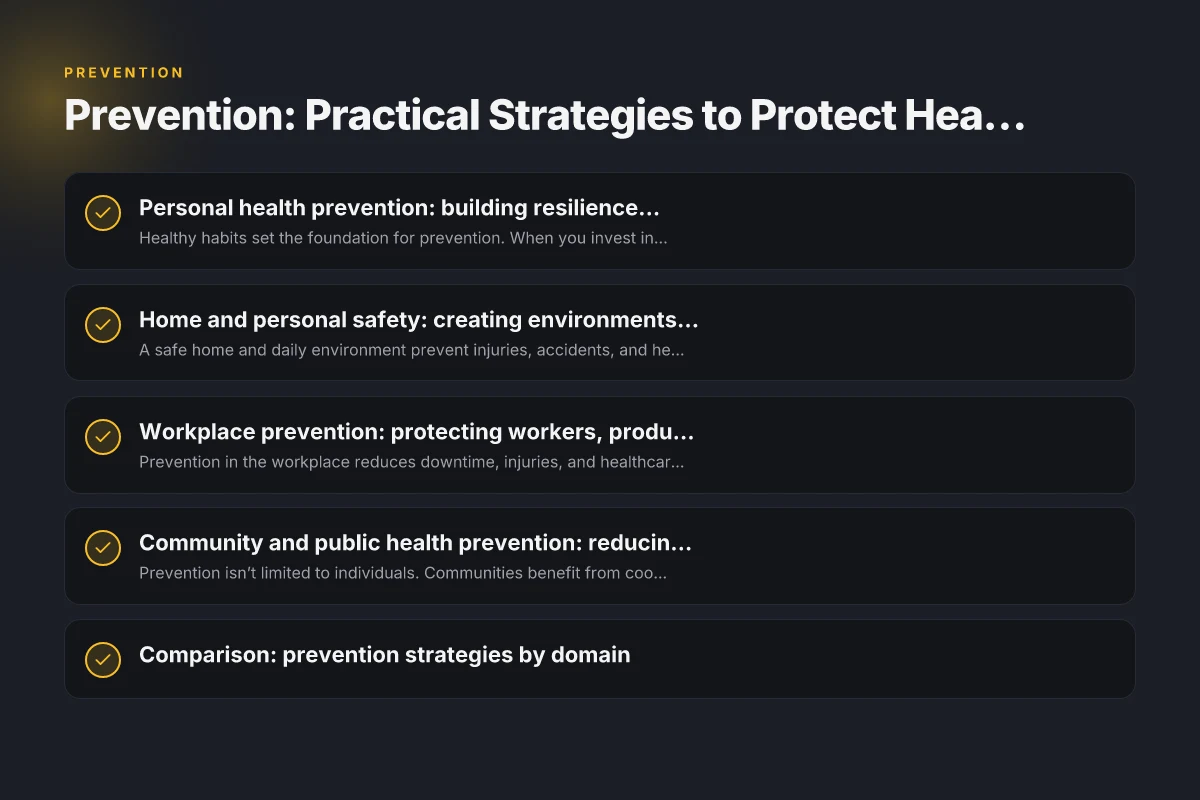
Home and personal safety: creating environments that reduce risk
A safe home and daily environment prevent injuries, accidents, and health issues. Emphasis on structure, awareness, and maintenance yields big dividends.
Fire and electrical safety
- Install and test smoke and carbon monoxide detectors regularly.
- Check cords for wear, avoid overloading outlets, and keep flammables away from heat sources.
- Have an escape plan and a family meeting point.
Falls prevention and ergonomics
- Use non-slip mats, handrails, and adequate lighting in stairways.
- Arrange furniture to keep walkways clear. Add anti-slip footwear.
- Ergonomic setups for desks and work surfaces reduce strain and injury.
Hygiene and contamination control
- Effective handwashing techniques. Sanitizer when soap isn’t available.
- Clean surfaces regularly with appropriate disinfectants.
- Food safety: proper storage, cooking temperatures, and avoiding cross-contamination.
Home and personal safety risk reduction options
| Area | Intervention | Practical steps | Expected outcome |
|---|---|---|---|
| Home safety | Fire prevention | Smoke detectors, plan exit routes | Reduces fire harm (yes) |
| Home safety | Fall prevention | Handrails, non-slip floors | Fewer injuries (yes) |
| Personal safety | Safe habits | Use seatbelts, helmet when needed | Lower injury risk (yes) |
| Environment | Safe storage | Lock up chemicals, meds | Fewer accidental poisonings |
| Household tech | Smart alerts | Motion sensors, cameras | Quick response capability |
Compiled November 2026; check the provider's site for current details. Links with Universities: How to Build Meaningful Academic Partnerships
Workplace prevention: protecting workers, productivity, and morale
Prevention in the workplace reduces downtime, injuries, and healthcare costs while boosting engagement. It starts with leadership, clear policies, and practical training.
Safety programs and training
- Regular safety drills, incident reporting, and near-miss analysis.
- Personal protective equipment (PPE) where appropriate, with training on proper use.
- Ergonomic assessments for desks, chairs, and tools.
Health-focused practices
- Wellness programs that encourage physical activity, nutrition, and stress management.
- Mental health awareness and access to support resources.
- Vaccination drives and flu shot clinics if relevant to the workforce.
Policies that support prevention
- Clear return-to-work and leave policies, reducing pressure to work while ill.
- Safe operating procedures (SOPs) for machinery and hazardous tasks.
- Incident investigation processes that identify root causes and prevent recurrence.
Community and public health prevention: reducing collective risk
Prevention isn’t limited to individuals. Communities benefit from coordinated actions that slow the spread of disease, protect vulnerable groups, and improve environmental health.
Infectious disease prevention
- Vaccination campaigns, hygiene promotion, and access to vaccination sites.
- Public communication that is clear, evidence-based, and accessible to diverse audiences.
Environmental health
- Air and water quality monitoring, safe waste disposal, and pollution reduction.
- Urban design that supports physical activity, access to greenspace, and safe neighborhoods.
Preparedness and resilience
- Emergency kits for households and workplaces with essentials and contact lists.
- Community drills and mutual aid networks to respond to natural disasters or public health events.
Workplace prevention options comparing impact
| Category | Intervention | Example | Impact on outcomes |
|---|---|---|---|
| Safety | Ergonomic workstations | adjustable desks | Fewer injuries (supported) |
| Health | Sick leave culture | Flexible PTO | Reduced spread, morale boost |
| Environment | Air quality | HEPA filters | Better concentration, fewer illnesses |
| Procedures | Incident reporting | Near-miss logs | Early risk detection |
| Training | Safety drills | Fire drills | Prepared response (yes) |
Compiled November 2026; check the provider's site for current details. Request: How to Make Clear and Effective Requests That Get Results
Comparison: prevention strategies by domain
| Domain | Key focus | Typical actions | Measuring success |
|---|---|---|---|
| Personal health | Individual resilience | Sleep, nutrition, exercise, screenings | Health metrics, adherence rates |
| Home safety | Injury and hazard reduction | Detectors, ergonomics, cleaning | Incident counts, maintenance logs |
| Workplace safety | Safe operations, culture | SOPs, training, PPE, ergonomics | Injury rates, near-miss reports |
| Community health | Population-level protection | Vaccination, sanitation, communication | Coverage, disease incidence |
| Preparedness | Readiness for disruption | Kits, plans, drills | Drill completion, readiness scores |
Practical steps you can start today
- Do a one-week prevention audit: walk through your home, work, and routines to identify obvious risks and gaps.
- Create a simple safety calendar: schedule detector tests, medical appointments, and maintenance tasks on repeat.
- Set up habit cues: pair preventive actions with established routines (e.g., drink water after brushing teeth, stretch after long meetings).
- Build an emergency kit: include water, non-perishable food, a flashlight, a basic first-aid kit, copies of essential documents, and a charged power bank.
- Establish a check-in system: especially for vulnerable family members or colleagues, set regular communication routines.
- Invest in education: learn basic first aid, CPR, or mental health literacy to act promptly in emergencies.
How to tailor prevention to your situation
- Start with your highest-risk areas: for some, this means health screenings. For others, home safety or workplace hazards.
- Balance effort and impact: focus on actions that yield meaningful reductions in risk with reasonable time investment.
- Involve others: prevention is more effective when families, teams, or communities commit together.
- Make it measurable: track progress with simple metrics like completed checks, reduced incidents, or improved scores on health tests.
Final section: a thoughtful recommendation for lasting prevention
Prevention is not a one-off task. It is a continuous, evolving practice. Start with small, repeatable actions that fit your context, then build a structured system around them. Regular review, quarterly at minimum, helps you refine routines, retire outdated practices, and adopt new evidence-based methods. Emphasize consistency over perfection: even modest improvements compound over time, leading to safer homes, healthier bodies, resilient workplaces, and stronger communities. If you’re unsure where to begin, pick one domain that matters most to you today and establish a clear, actionable plan for the next 30 days.