Help Smokers: Practical Support and Strategies to Quit or Reduce Harm
Comprehensive guidance for smokers seeking help to quit or cut down, with practical steps and resources.
The decision to seek help as a smoker is the first and most important step toward a healthier life. Whether your goal is to quit entirely or simply reduce the number of cigarettes you smoke, there are proven strategies, practical tips, and supportive tools that can make a real difference. This guide lays out the options, helps you choose a plan, and points to resources that can keep you motivated and on track.
Comparison of quitting methods at a glance
| Method | Typical timeline to abstinence | Nicotine replacement therapy (NRT) required? | Evidence of effectiveness (approx) | Accessibility | Notes |
|---|---|---|---|---|---|
| Cold turkey | Immediate start; days to first smoke-free period | No | Moderate to strong for some | Widely accessible | Quick, unsure longevity |
| Counseling + behavioral support | Ongoing | Optional | High with support | Widely accessible | Personal plan helps adherence |
| Nicotine patch | Begin use before quit date | Yes | Strong | Readily available | Set-and-forget option |
| Nicotine gum/lozenges | Start before/at quit | Yes | Moderate to strong | OTC | Chewing schedule matters |
| Varenicline (Chantix) | Quit date planned | Yes | High with support | Prescription | Possible side effects |
| Bupropion (Zyban) | Quit date planned | Yes | Moderate to high | Prescription | Monitor mood changes |
| E-cigarettes for harm reduction | Varies by product | Sometimes | Limited vs. quit methods | Varies by region | Not a guaranteed quit |
| Combination therapy (NRT + medication) | Depends | Yes | Higher | Access varies | May require clinician |
| Behavioral substitution (habit replacement) | Ongoing | No | Supports reduction | Easy | Pair with plan |
| Physical activity + stress management | Ongoing | No | Supports quitting | Widely accessible | Complementary |
Compiled November 2026; check the provider's site for current details.
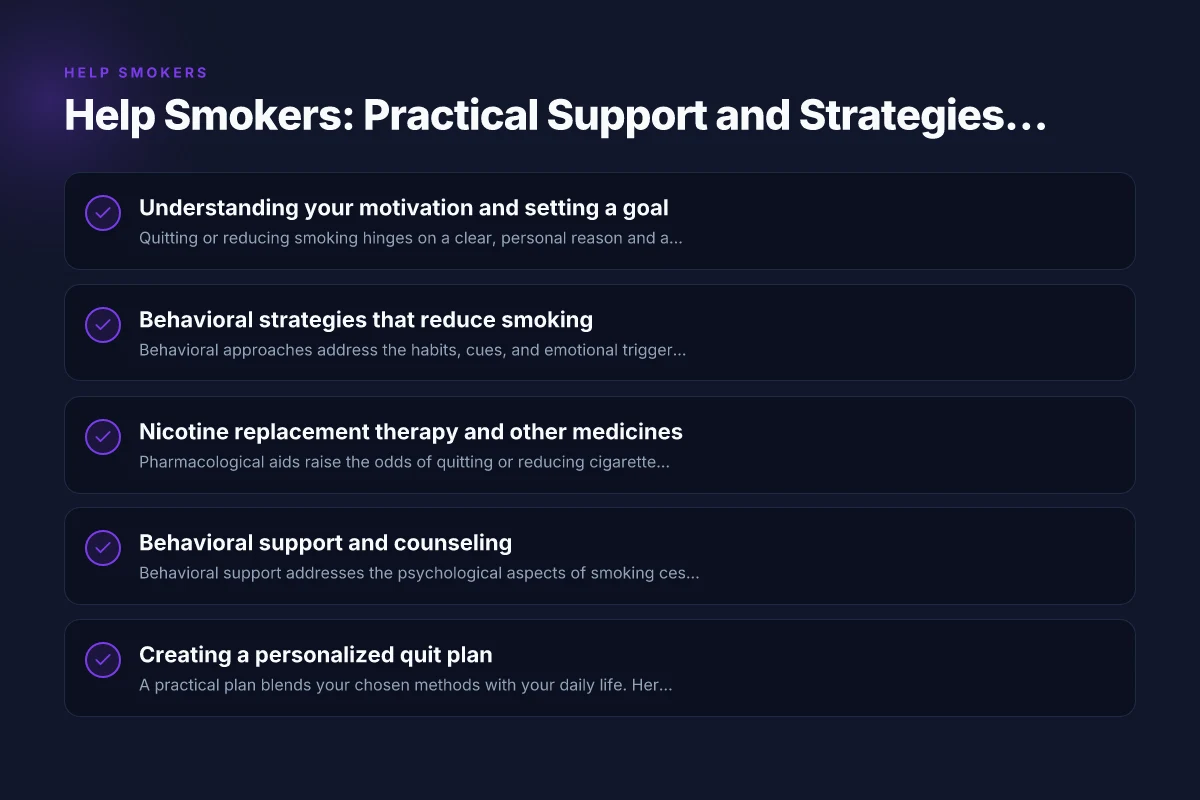
Understanding your motivation and setting a goal
Quitting or reducing smoking hinges on a clear, personal reason and a realistic plan. Start by noting why you want to change. Common motivations include health improvements, financial savings, and protecting loved ones from secondhand smoke. Then set a SMART goal:
- Specific: “Quit completely on my 1st of next month” or “Reduce to five cigarettes a day.”
- Measurable: Track daily cigarettes or nicotine intake.
- Achievable: Choose a stepwise plan if quitting cold turkey feels daunting.
- Relevant: Align the goal with your values and daily routines.
- Time-bound: Give yourself a target date and milestones.
Some people find it helpful to pair their goal with a quitting or reduction method, such as pharmacotherapy or behavioral support, to increase the odds of success.
Behavioral strategies that reduce smoking
Behavioral approaches address the habits, cues, and emotional triggers that drive smoking. They often work best when combined with other strategies. Consider these practical steps:
- Identify triggers: Morning coffee, after meals, social events, or stress can prompt a cigarette. Note when you smoke most and plan alternatives.
- Change routines: If you always smoke after a workout or with a drink, change the ritual. Try tea, water, or a brief walk instead.
- Delay and distract: When you have the urge, delay for 5–10 minutes, then reassess. Use a quick activity like breathing exercises or a quick chore.
- Build a support system: Tell friends, family, or colleagues about your plan. Encourage accountability, celebrate small wins, and ask for reminders during high-risk moments.
- Use problem-solving skills: Develop coping strategies for cravings, such as reading a short article, listening to music, or stretching.
Nicotine replacement therapy and other medicines
Pharmacological aids raise the odds of quitting or reducing cigarette intake by easing withdrawal symptoms and cravings. They are most effective when tailored to your smoking pattern and health. Common options include: Adolescent Smoking: Understanding, Risks, and Ways to Help Youth Quit
- Nicotine replacement therapy (NRT): Patches, gum, lozenges, inhalers, and nasal sprays.
- Non-nicotine prescription medications: Varenicline (Chantix/Champix) and bupropion (Zyban).
- Combination therapy: Some people benefit from using more than one method at once, such as a long-acting patch plus a fast-acting gum or lozenge. Important notes:
- These aids do not cause dependence on the aid itself. They support the process of quitting smoking.
- Discuss with a healthcare provider before starting medications, especially if you have health conditions or take other medicines.
- Side effects vary. A clinician can help adjust the plan if needed.
Behavioral support and counseling
Behavioral support addresses the psychological aspects of smoking cessation and is a strong predictor of success. Options include:
- Individual counseling: One-on-one sessions with a trained counselor, in-person or via telehealth.
- Group programs: Structured programs can offer shared experiences and accountability.
- Telephone hotlines and digital programs: Free quitlines often provide proactive coaching and resources.
- Digital tools: Apps that track progress, manage cravings, and deliver daily tips can enhance motivation. Evidence shows that combining pharmacotherapy with behavioral support yields better quit rates than either approach alone. The right mix depends on your preferences, access, and budget.
Creating a personalized quit plan
A practical plan blends your chosen methods with your daily life. Here’s a simple framework:
- Pick a target date or gradual reduction timeline.
- Choose one or two core strategies (e.g., NRT plus weekly counseling).
- List triggers and plan replacements for each (e.g., drink water after meals, go for a 5-minute walk).
- Prepare a relapse plan: If a craving hits, implement a 3-step response (pause, use a coping technique, re-evaluate goal).
- Schedule regular check-ins with a clinician or support partner to review progress and adjust as needed.
Tools for creating a personalized quit plan
| Component | What to decide | How to use | When to adjust | Helpful notes | Example prompts |
|---|---|---|---|---|---|
| Motivation | Why quit? | Write a personal goal | Review weekly | Tie to health, finances | "My reason is my health" |
| Smoke triggers | Identify triggers | Map to responses | Reassess monthly | Plan alternatives | "If stressed, do 5-min walk" |
| Quit date | Set a date | Mark on calendar | Move only if necessary | Public commitment helps | "My quit date is May 1" |
| Support people | Who helps | List contacts | Notify supporters | Ask specific tasks | "Call me if I slip" |
| Supplies plan | NRT or meds? | Acquire ahead | Stock up before quit | Keep extras | "NRT ready 2 weeks prior" |
| Coping strategies | Short-term tactics | Choose 3-5 | Use during cravings | Try sampling | "Deep breathing, walk, chew gum" |
| Relapse plan | What to do after slip | Define steps | Reengage plan quickly | Normalize slips | "Restart plan immediately" |
| Rewards | How to celebrate | Set milestones | Track achievements | Small rewards | "Treat at 1 week, 1 month" |
| Risk management | Safety checks | Review meds | Adjust with clinician | Watch mood, sleep | "Check side effects weekly" |
Compiled November 2026; check the provider's site for current details. Smoking Matters: Understanding Impact, Risks, and Paths to Change
A practical comparison: quitting methods at a glance
Here is a quick comparison to help you choose your path. The table highlights common methods, typical success indicators, and what to expect.
| Method | How it helps with cravings | Typical success indicators | Common considerations |
|---|---|---|---|
| Cold turkey | Immediate cessation, mental reset | Varies; some quit quickly, others relapse | High initial difficulty; best with strong motivation and support |
| Nicotine replacement therapy (NRT) | Eases withdrawal; quick relief for some | Higher quit rates when combined with support | Start with recommended doses; check for skin and mouth sensitivities |
| Prescription meds (varenicline, bupropion) | Reduces cravings and withdrawal symptoms | Moderate to high quit rates with support | Potential side effects; need clinician prescription and follow-up |
| Behavioral counseling | Builds coping skills; reduces relapse risk | Long-term maintenance; effective with medication | Time and access required; can be through phone/video |
| Digital apps and hotlines | Daily motivation, accountability | Improves adherence; variable by engagement | Useful as a supplement, not a replacement for support |
Reducing harm when quitting isn’t immediate
Not everyone can quit instantly, and it’s reasonable to aim for reduced smoking as a step toward quitting completely. Harm-reduction approaches can lower exposure to harmful substances and improve health status:
- Gradual reduction: Decrease cigarettes per day by a set amount each week.
- Smoke-free zones: Create areas at home or work where smoking is not allowed.
- Alternative nicotine sources: If you use NRT, ensure you taper usage as your cravings decline.
- Mindful stress management: Stress is a common trigger. Practice breathing, meditation, or brief exercise.
- Health monitoring: Track blood pressure, sleep, energy, and cough to observe improvements over time.
Reducing harm when quitting isn’t immediate
| Strategy | What it does | Best use | Limitations | Access | Outcome focus |
|---|---|---|---|---|---|
| Reduce cigarettes per day | Lowers exposure | Gradual reduction | Risk of relapse | Widely available | Lower dependence |
| Switch to lower-nicotine products | Exposes less nicotine | Step down nicotine | Not foolproof | OTC/prescriptions | Control cravings |
| Use nicotine replacement | Maintains nicotine with fewer toxins | Equal or lower dose | If misused, may prolong use | Readily available | Manage withdrawal |
| E-cigarettes (harm reduction) | Delivers nicotine with fewer combusted toxins | If quitting fails | Long-term effects uncertain | Varies | Move toward cessation |
| Behavioral support during reduction | Maintains motivation | Combine with plan | Requires engagement | Accessible | Sustains progress |
| Delayed quitting with medical advice | Safety check | consult clinician | Not for all | Healthcare access | Personal safety |
Compiled November 2026; check the provider's site for current details. Environmental Health: Protecting People and the Planet
Addressing challenges and pitfalls
Quitting or reducing smoking often comes with hurdles. Being prepared helps you stay on track:
- Relapse is common: It doesn’t mean failure. Analyze what led to the slip and adjust your plan.
- Weight gain concerns: Some people gain weight after quitting. Plan healthy meals and regular physical activity to balance this.
- Social pressures: Explain your goal to friends and colleagues so they can support you or avoid triggering situations.
- Medication side effects: Some people experience nausea, vivid dreams, or headaches with certain medications. Discuss concerns with your clinician.
Where to get help: resources and next steps
Taking the next step is easier when you know where to turn. Consider:
- Primary care provider: Your first stop for guidance on medications, a quit plan, and referrals to counseling.
- Quitlines: Many countries offer free, confidential telephone coaching and resources.
- Local clinics and community health centers: Often provide low-cost or sliding-scale services.
- Online programs and apps: Useful for daily motivation, tracking, and tips. Pair with real-world support for best results.
- Support groups: In-person or virtual groups can offer peer encouragement and accountability.
Final considerations before you begin
- Talk to a clinician: Especially if you have heart disease, COPD, asthma, or other conditions, medications may require medical oversight.
- Choose a plan you can sustain: A combination of pharmacotherapy and behavioral support generally yields the best outcomes.
- Setbacks happen: Treat them as learning experiences, not failures, and reset your plan promptly.
- Celebrate progress: Mark milestones, such as a smoke-free week or month, to maintain motivation.
Recommendation If you’re considering how to help smokers in your life, or if you’re helping yourself, start with a clear goal, pair behavioral strategies with pharmacotherapy if appropriate, and seek behavioral support. A tailored plan that fits your routines and preferences, plus access to professional guidance, dramatically increases your chances of quitting or reducing safely and sustainably. Begin with a conversation with your healthcare provider about the most suitable options for you, then build a practical, supported plan that respects your pace and needs. Cancer in the Workplace: What Employers and Employees Need to Know