Cancer in the Workplace: What Employers and Employees Need to Know
Practical guidance for managing cancer in the workplace with rights, accommodations, and support strategies.
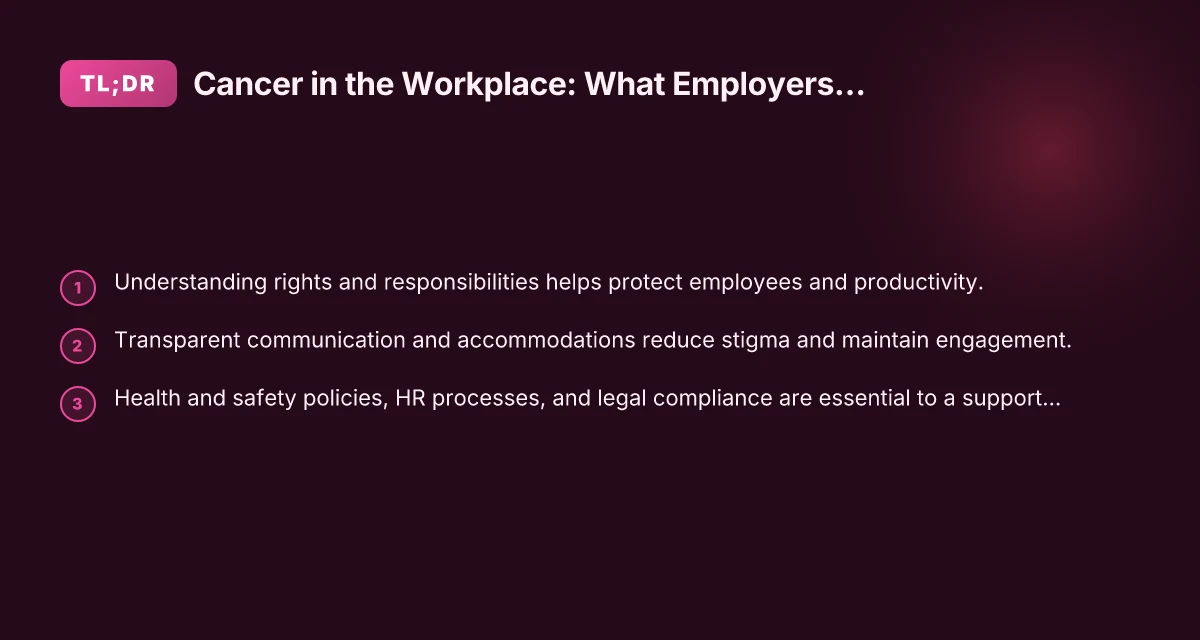
The workplace is not just a place to work. It's where people live their lives, including health journeys like cancer. When cancer enters the workplace, it can affect performance, attendance, and morale. Yet with clear policies, compassionate communication, and practical accommodations, employers can support affected employees and maintain a productive, inclusive environment. This article outlines the key considerations, practical steps, and resources to address cancer in the workplace.
Rights and responsibilities overview
| Topic | Employer obligations | Employee rights | Practical note | Legal considerations |
|---|---|---|---|---|
| Discrimination protection | Yes | Yes | Includes race, gender, illness | Governed by anti-discrimination laws |
| Privacy and data handling | Requires confidential handling | Right to privacy of health info | Limit data collection to need-to-know | Data protection compliance |
| Workplace safety | Maintain safe environment | Right to safe conditions | Training and PPE may be needed | Occupational safety standards |
| Reasonable accommodation | Proactive assessment | Request accommodations | Must be timely and appropriate | Balances needs with business |
Compiled November 2026; check the provider's site for current details.
Understanding rights and responsibilities
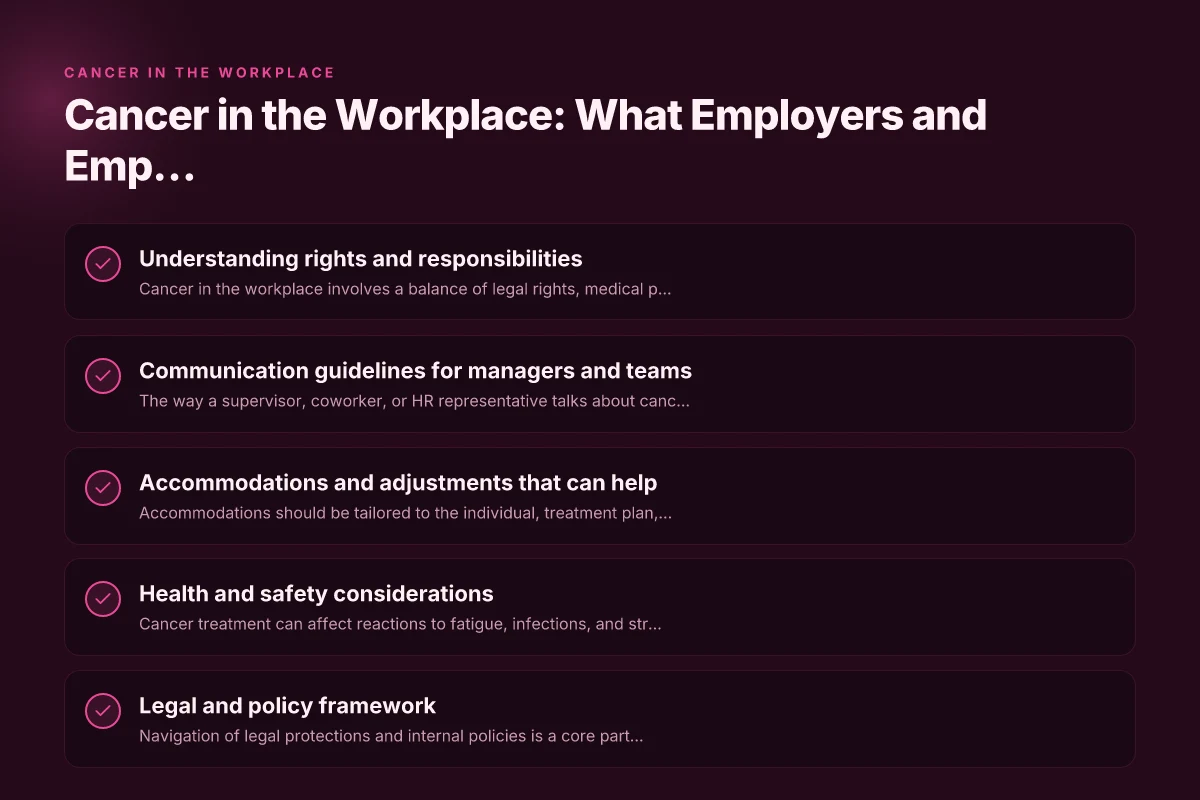
Cancer in the workplace involves a balance of legal rights, medical privacy, and organizational policies. Laws vary by country and region. Several common threads appear across many jurisdictions:
- Employee rights: The right to medical leave, reasonable accommodations, and protection from discrimination due to health conditions.
- Employer responsibilities: Provide a safe work environment, preserve confidentiality, and explore reasonable adjustments to duties, schedules, or environments.
- Medical information privacy: Personal health information should be treated confidentially, with disclosures limited to what is necessary for accommodation and compliant with privacy laws.
- Documentation: Employers may require medical documentation to justify accommodations or leave, typically from a treating physician, while avoiding intrusive or excessive requests.
Key takeaway: Start with a clear understanding of local laws (employment, health, and disability rights) and align internal policies accordingly. Consult legal counsel or human resources professionals if needed.
Communication guidelines for managers and teams
The way a supervisor, coworker, or HR representative talks about cancer matters. Communication should be compassionate, respectful, and practical.
- Open dialogue: Invite the employee to share what they’re comfortable disclosing and what accommodations would help.
- Avoid assumptions: Don’t guess about needs. Ask directly what would be helpful and feasible.
- Privacy first: Share information only on a need-to-know basis with consent.
- Normalize support: Encourage a culture where health journeys are respected, not stigmatized.
Practical tips for teams: Cancer Control: Practical Strategies for Prevention, Early Detection, and Management
- Use inclusive language and avoid euphemisms that minimize the situation.
- Keep lines of communication open for updates as treatment and capacity change.
- Provide practical support, such as flexible scheduling or task redistribution, when appropriate.
Accommodations and adjustments that can help
Accommodations should be tailored to the individual, treatment plan, and job role. The goal is to enable continued meaningful work while prioritizing safety and well-being.
Common accommodations include:
- Flexible scheduling: Allow staggered shifts, reduced hours, or remote work when possible.
- Task modification: Reassign or rotate duties that are physically demanding or stressful.
- Rest breaks and space: Provide additional breaks or a quiet space if fatigue or treatment side effects are challenging.
- Transportation and logistics: Adjust travel requirements or provide parking accommodations near entrances.
- Ergonomic and safety considerations: Ensure equipment and workspace support comfort, and adjust exposure to hazards if relevant to treatment.
- Medical leave and return-to-work plans: Develop a phased return, with milestones and ongoing communication with the employee.
When designing accommodations, use a collaborative process:
- Start with the employee’s input and medical recommendations.
- Propose a range of options and agree on a plan in writing.
- Review and adjust the plan as treatment evolves.
Table: example accommodation options by need (illustrative) | Need or barrier | Example accommodation | Potential trade-offs / notes | | fatigue or low energy | shorter shifts, more breaks | Monitor for overwork; adjust gradually | | cognitive or concentration challenges | flexible deadlines, written briefs | Provide task lists and summaries | | physical limitations | sit-stand desk, lighter duties | Ensure safety and compliance with role | | treatment side effects (nausea, immune concerns) | remote work during low days; flexible scheduling | Coordinate with healthcare team if needed | Sun Wise: A Practical Guide to Safe and Sustainable Sun Exposure
Takeaway: Accommodations should be practical, incremental, and revisited regularly to match the employee’s health status and job requirements.
Communication guidelines for managers and teams
| Scenario | Recommended approach | Timing | Key messages | Tools / channels |
|---|---|---|---|---|
| Initial disclosure by employee | empathetic, private setting | ASAP after disclosure | Supportive, non-judgmental | In-person, secure channel |
| Ongoing check-ins | regular, respectful | Weekly or biweekly | Listen, ask how to help | 1:1 meetings, HR follow-up |
| Team updates | clear, with boundaries | After consent | Allay rumors, focus on support | Email, intranet post |
| Sensitive topics | concise, respectful language | As needed | Avoid stigma, offer resources | Email template, script |
| Performance concerns | objective, fact-based | Promptly when observed | Focus on work impact, not illness | Performance plan template |
Compiled November 2026; check the provider's site for current details.
Health and safety considerations
Cancer treatment can affect reactions to fatigue, infections, and stress. Employers have a duty to maintain a safe and respectful workplace while accommodating health-related needs. Booklets: A Practical Guide to Small, Powerful Print Materials
Important areas to consider:
- Infection control: Some treatments weaken the immune system. Ensure appropriate hygiene measures and flexible attendance policies during illness risk periods.
- Workplace hazards: Reassess exposure to chemicals, heavy lifting, or prolonged standing if these could pose risks during treatment.
- Mental health support: Anxiety, stress, and the emotional impact of cancer treatment are common. Provide access to employee assistance programs or counseling.
- Workplace adjustments: Ensure accessible facilities, quiet areas, and ergonomic supports as needed.
- Wellness and return-to-work planning: Collaborate with healthcare providers to determine safe activities and pacing for return.
Takeaway: Proactive risk assessment and a compassionate approach help maintain safety and productivity without compromising care.
Legal and policy framework
Navigation of legal protections and internal policies is a core part of cancer in the workplace. Specifics differ by country. Several common elements recur:
- Anti-discrimination and disability rights: Laws often protect employees with serious illnesses from unfair treatment.
- Leave provisions: Medical leave, family caregiving leave, or sick leave may apply, with job protections in some jurisdictions.
- Reasonable accommodations: Employers typically must provide reasonable adjustments unless it causes undue hardship.
- Privacy protections: Medical information should be stored securely and disclosed only with consent or as required for accommodations.
- Documentation requirements: Employers may request medical certification, but should avoid overreach or ongoing requests beyond what’s necessary.
Practical approach: Create or update an accommodations policy, ensure managers know how to implement it, and communicate rights and resources to employees. Legal counsel can tailor policies to local laws. Networks: A Practical Guide to Understanding Modern Connectivity
Practical steps for employers: building a supportive framework
- Develop a cancer in the workplace policy: Define how to handle disclosure, accommodation requests, leave, return-to-work, and confidentiality.
- Train managers and HR: Provide practical guidance on conversations, documentation, and support mechanisms.
- Create an accommodation process: A standardized form or process that collects necessary information while protecting privacy.
- Establish a return-to-work program: A phased plan with goals, check-ins, and adjustments as needed.
- Foster a supportive culture: Normalize discussions about health without stigma. Highlight available resources and demonstrate leadership support.
- Track and review: Regularly assess the policy’s effectiveness, gather feedback, and adjust as needed.
Section: Returning to work after cancer treatment Returning to work is a major milestone and may require careful planning.
- Communication plan: Set expectations for ongoing updates and what constitutes a successful return.
- Phased return: Gradual increase in hours and responsibilities aligned with energy levels and treatment schedule.
- Ongoing accommodations: Some needs may persist longer than others. Revisit accommodations periodically.
- Health considerations: Encourage employees to keep medical providers informed about job demands and any needed adjustments.
If a return-to-work plan isn’t feasible due to sustained health impacts, explore alternatives such as extended leave, role adjustments, or, when appropriate, transitions to part-time roles that preserve expertise.
Accommodations and adjustments that can help
| Accommodation type | Description | Example measures | Required process | Potential impact |
|---|---|---|---|---|
| Flexible scheduling | Adjust hours | Staggered shifts, part-time | Supervisor approval | Improves attendance |
| Remote/modified duties | Partial remote work | Telework, do-not-travel tasks | Job analysis | Maintains productivity |
| Medical leave options | Time off for treatment | Short/long-term leave | Leave policy compliance | Supports recovery |
| Ergonomic adjustments | Equipment or layout changes | Sit-stand desks, chair support | Equipment request | Reduces strain, safety |
| Task reallocation | Reassign non-critical tasks | Adjust workload | Collaboration with team | Maintains performance |
| Rest and break accommodations | Additional breaks | Longer breaks, quiet room | Policy alignment | Mitigates fatigue |
Compiled November 2026; check the provider's site for current details. Prevention: Practical Strategies to Protect Health, Safety, and Well-Being
Resources and practical templates
- Employee rights and disability resources: Many countries provide government or nonprofit organizations with guidance on workplace accommodations and leave.
- Workplace policy templates: Look for examples of cancer or serious illness policies, including confidentiality and accommodation processes.
- Return-to-work checklists: Useful to ensure all parties cover health, safety, scheduling, and communication aspects.
- Health and wellness programs: Employee assistance programs, counseling, stress management workshops, and fatigue management resources can support affected employees.
Short list of items to collect or prepare:
- Medical certification guidelines and permitted requests.
- A standardized accommodation request form.
- A template for return-to-work plans and schedules.
- A privacy and confidentiality policy statement.
- A communication plan for teams to ensure respectful and supportive dialogue.
Recommendation: Start with empathy, clarity, and compliance If you are an employer or HR professional, begin with a clear, compassionate policy that respects privacy and legal requirements. Train managers to have respectful conversations, avoid judgments, and focus on practical accommodations. Encourage employees to disclose information at a pace they are comfortable with and ensure support is readily available. Regularly review policies and outcomes to improve the workplace environment for all employees facing health challenges, including cancer.
Cancer in the workplace is not merely a medical issue. It’s a human resources and culture issue. When handled with thoughtful policy design, proactive communication, and flexible support, workplaces can empower affected employees to continue contributing meaningfully while honoring their health needs. By protecting rights, simplifying accommodations, and fostering a culture of care, organizations can reduce stigma, maintain performance, and reinforce a sense of belonging for everyone.