NSPCC: What It Is, What It Does, and How It Supports Children in the UK
A comprehensive guide to NSPCC, its mission, services, how to get help, and how to support the charity.
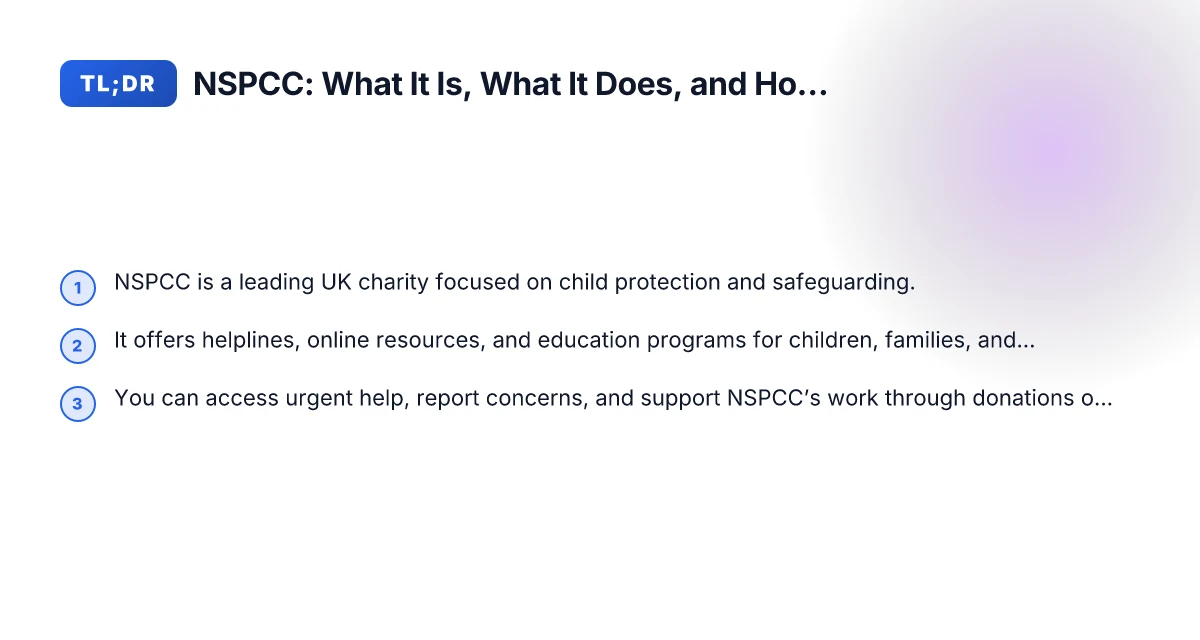
The NSPCC (National Society for the Prevention of Cruelty to Children) is one of the UK’s longest-running and most recognizable charities dedicated to protecting children. From hotlines to school programs and online learning, NSPCC works to prevent abuse, support young people’s wellbeing, and empower communities to look out for one another. This article answers common questions about what NSPCC does, how to access its services, and how you can get involved.
NSPCC services overview comparison
| Service | Purpose | Target users | How to access | Typical cost | Availability notes |
|---|---|---|---|---|---|
| NSPCC core services | Child protection, safeguarding advice, and support | Families, carers, professionals | Online and phone | Free to access some services; some helplines are free | National coverage in the UK |
| Childline | 24/7 helpline for children and young people | Young people up to age 19 | Phone, webchat, text | Free | Available 24/7; confidential |
| School safeguarding support | Guidance for schools on safeguarding practices | Schools, teachers, safeguarding leads | Via NSPCC resources and liaison | Free resources; paid consultancy may apply | Integrates with school policies |
| Community outreach | Local workshops and campaigns | Communities, parents, young people | Local events; online outreach | Free or donation-based | Availability varies by area |
Compiled November 2026; check the provider's site for current details.
What is NSPCC and what does it stand for?
NSPCC stands for the National Society for the Prevention of Cruelty to Children. Founded in 1884, it has evolved into a modern safeguarding charity that focuses on prevention, protection, and support. Its mission is simple but far-reaching: every child deserves a childhood free from abuse and neglect, with safeguarding at the center of everything it does. The NSPCC operates across the United Kingdom and in some circumstances internationally, adapting to changing safeguarding needs and technologies.
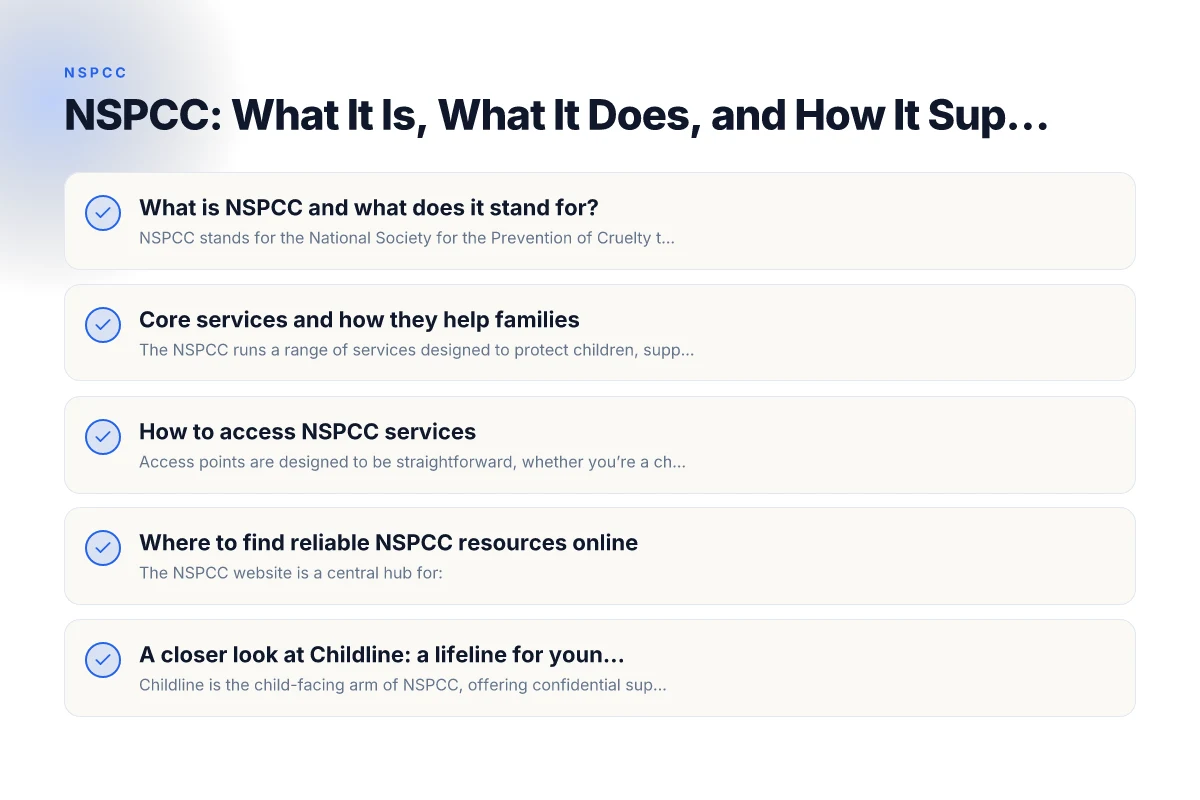
Core services and how they help families
The NSPCC runs a range of services designed to protect children, support families, and improve safeguarding practices in schools, communities, and online spaces. Some of the core offerings include:
- 24/7 helplines: The NSPCC Helpline, and Childline for young people, provide confidential support and advice. If a child is at risk or a concern arises, you can contact them for guidance on safe steps to take.
- Childline: A confidential service for children and young people, offering telephone, online, and webchat support. Childline helps with worries ranging from bullying to abuse and mental health.
- Prevention and education programs: Workshops and materials aimed at schools, community groups, and youth organizations to teach children about safety, consent, healthy relationships, and how to seek help.
- Safeguarding resources for professionals: Tools and training for teachers, social workers, healthcare staff, and other professionals who work with children to help them identify risks and respond appropriately.
- Campaigns and advocacy: NSPCC campaigns raise awareness about child protection issues, influence policy, and promote safer online environments.
How to access NSPCC resources and alternatives
| Resource | Access method | Format | Cost | Reliability cue | Best for |
|---|---|---|---|---|---|
| NSPCC website | Online | Articles, tips, guides | Free | Official site | General information, self-help |
| NSPCC helplines | Phone or webchat | Text and calls | Free | Official contact channels | Immediate concerns, guidance |
| Local safeguarding charities | Local directory | Varies | Varies | Local reviews | Community-specific help |
| Government child protection guidance | Official government portals | Policy documents | Free | Official source | Policy and compliance needs |
Compiled November 2026; check the provider's site for current details. NSPCC survey: what the latest findings reveal about child protection and public awareness
How to access NSPCC services
Access points are designed to be straightforward, whether you’re a child, a parent, or a professional:
- If you’re worried about a child’s safety: contact the NSPCC Helpline. They offer guidance on how to respond to concerns and can connect you with local services if needed.
- If you’re a child or young person needing help: reach out to Childline. They provide confidential support by phone, text, email, and online chat.
- If you’re in a school or community setting: NSPCC runs workshops and training sessions, plus online resources like safety tips, lesson plans, and activity ideas.
- For professionals seeking safeguarding resources: you can access policy guidelines, safeguarding frameworks, and practical tools to implement in your setting.
For urgent safety concerns about a child, always contact local emergency services or child protection authorities in your area.
Where to find reliable NSPCC resources online
The NSPCC website is a central hub for:
- Practical safety guidance for children and families
- Advice on spotting signs of abuse or neglect
- Step-by-step guides for reporting concerns
- Educational materials for schools and youth groups
- Information on mental health, wellbeing, and resilience for young people
Online safety content is particularly important today, and NSPCC provides up-to-date resources on topics such as online grooming, cyberbullying, and privacy settings. Submission Dates: A Complete Guide to Planning, Deadlines, and Deadlines Management
A closer look at Childline: a lifeline for young people
Childline is the child-facing arm of NSPCC, offering confidential support to children and young people who are feeling overwhelmed, worried, or in danger. Key features include:
- Free, confidential support any time: 24/7 access via phone, online chat, or webform
- Trained counselors and support workers who understand young people’s experiences
- An emphasis on safety planning, coping strategies, and connecting children with appropriate services
Childline also provides information for parents and carers who want to talk with their children about difficult topics, helping families create open channels for communication.
Decision factors: NSPCC vs. other safeguarding options
| Factor | NSPCC (yes/no) | Other options (yes/no) | Key differentiator | Suitability indicator |
|---|---|---|---|---|
| 24/7 support | yes | yes/no depending on service | Childline availability | Young people needing around-the-clock support |
| Confidential guidance | yes | yes | Anonymity and safeguarding expertise | When privacy matters |
| Local in-person services | yes (varies by area) | sometimes | Proximity matters | In-person preference |
| Free resources | yes | yes (some) | Accessibility | Budget-conscious users |
| Educational materials for schools | yes | yes (varies) | Structured safeguarding frameworks | School adoption |
Compiled November 2026; check the provider's site for current details. Staff Information: Best Practices for Managing, Protecting, and Utilizing Employee Data
How NSPCC supports safeguarding in schools and communities
Schools are a primary arena for safeguarding work. NSPCC collaborates with educators to build safer environments for children through:
- Whole-school safeguarding assessments and action plans
- Tutor-led sessions and assemblies on consent, personal safety, and healthy relationships
- Tools for recognizing warning signs of abuse or neglect
- Access to confidential reporting channels for staff and students
- Training for school leaders and safeguarding designated leads
Beyond schools, NSPCC engages communities with workshops, online courses for parents, and resources that help create protective networks around children.
A practical comparison: NSPCC services vs. other safeguarding options
| Aspect | NSPCC services | Other safeguarding options (local services) | Why NSPCC can be a good first step |
|---|---|---|---|
| Target audience | Children, families, schools, professionals | Local councils, police, NHS services, charities | NSPCC coordinates across sectors and provides child-focused guidance and confidential helplines |
| Availability | 24/7 helplines; nationwide reach | Varies by region; some waiting times | Immediate access to confidential support via Childline or Helpline |
| Focus | Prevention, protection, education, advocacy | Investigation, enforcement, medical care, crisis response | Complementary role: NSPCC provides prevention and early intervention |
| Accessibility | Online resources, phone, chat | In-person services, local offices | Multiple channels to fit different needs and preferences |
| Evidence base | Research-informed programs; impact reports | System-wide safeguarding mechanisms | Strong emphasis on community education and early reporting |
Note: The best option in any urgent safety scenario is to contact local emergency services or child protection authorities first. NSPCC services often provide a helpful next step for reporting concerns and accessing guidance.
How to support NSPCC and get involved
Support for NSPCC helps sustain its helplines, education programs, and campaigning work. Ways to get involved include: Post Qualifying Award
- Donate: Regular or one-off donations fund safeguarding programs, helplines, and outreach.
- Fundraise: Organize events, sponsor activities in schools, or run challenges to raise awareness and funds.
- Volunteer: Offer time in local fundraising teams, events, or community outreach programs.
- Campaign and advocate: Join or support NSPCC campaigns that push for policy improvements and child protection reforms.
- Shop and reuse: Some NSPCC initiatives include merchandise or practical resources where proceeds support services.
If you’re unsure where your support will go, NSPCC’s website often offers transparency reports, impact stories, and annual reviews that show how funds are allocated and the outcomes achieved.
Real-world impact: stories and outcomes
NSPCC’s impact is measured in lives protected, children helped, and communities strengthened. Examples of outcomes include:
- Increased reporting and earlier intervention in suspected cases of abuse
- Enhanced safeguarding knowledge among teachers and parents
- More robust online safety measures and digital literacy for young people
- Empowered children to speak up about their worries and seek help
These outcomes are supported by audits, research partnerships, and ongoing feedback from service users and professionals.
How to determine if NSPCC is right for your needs
Consider NSPCC if you are seeking: Statistics: Understanding Data, Methods, and Meaning
- Immediate, confidential support for a child’s safety concern
- Educational resources for schools or community groups
- Training or guidance for safeguarding professionals
- A trusted, long-standing charity with a focus on child welfare
If you’re looking for direct medical or social work interventions, you may also engage with local authorities or NHS services, with NSPCC providing complementary support and guidance.
The recommendation: combine access to NSPCC with local services
For most safeguarding challenges, a combined approach works best. Use NSPCC helplines or Childline for initial guidance, then coordinate with local safeguarding services or schools to implement concrete actions. If you’re a professional, explore NSPCC’s training and toolkits to strengthen your organization’s safeguarding framework. For families, leverage NSPCC resources to build conversations with children about safety, boundaries, and trust.
If you’re unsure where to begin, start with a confidential chat with Childline or contact the NSPCC Helpline for tailored advice on steps to take in your specific situation. They can help you navigate reporting options, safety planning, and available local resources.
In summary, NSPCC remains a cornerstone of child protection in the UK, offering accessible support, proactive education, and advocacy that together aim to reduce abuse and build safer communities for every child. Whether you’re seeking help for a child in danger, looking to educate a classroom, or hoping to contribute to a cause, NSPCC provides clear paths to action and support. Accredited Programs: What They Are, Why They Matter, and How to Choose