Support for patients
A practical guide to understanding and obtaining effective support for patients across medical, emotional, and practical dimensions.
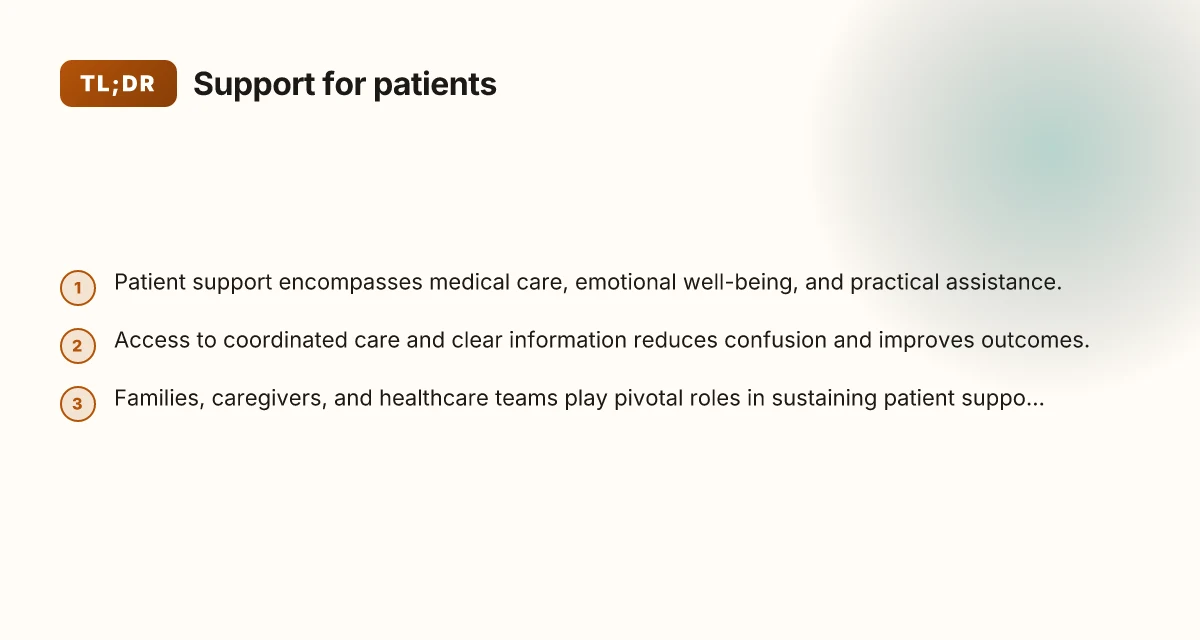
Support for patients is a cornerstone of effective healthcare. When patients receive comprehensive support, they are more likely to engage in treatment, adhere to plans, and experience better outcomes. This guide breaks down what patient support entails, who provides it, and how to access it. It also covers practical steps for patients, families, and caregivers to collaborate with health systems to ensure consistent, compassionate care.
Comparison of Patient Support Pillars
| Pillar | Description | Benefits | Potential Challenges |
|---|---|---|---|
| Information | Access to clear, accurate information | Improves understanding; supports decisions | Information overload; outdated data |
| Communication | Ongoing dialogue with providers | Timely answers; trust building | Wait times; miscommunication |
| Access | Ease of obtaining services | Faster care; fewer barriers | Insurance limits; geographic gaps |
| Emotional Support | Psychological and social support | Reduced stress; resilience | Availability; stigma |
| Coordination | Alignment across care team | Streamlined care; fewer duplications | Fragmentation; data sharing |
Compiled November 2026; check the provider's site for current details.
What patient support means
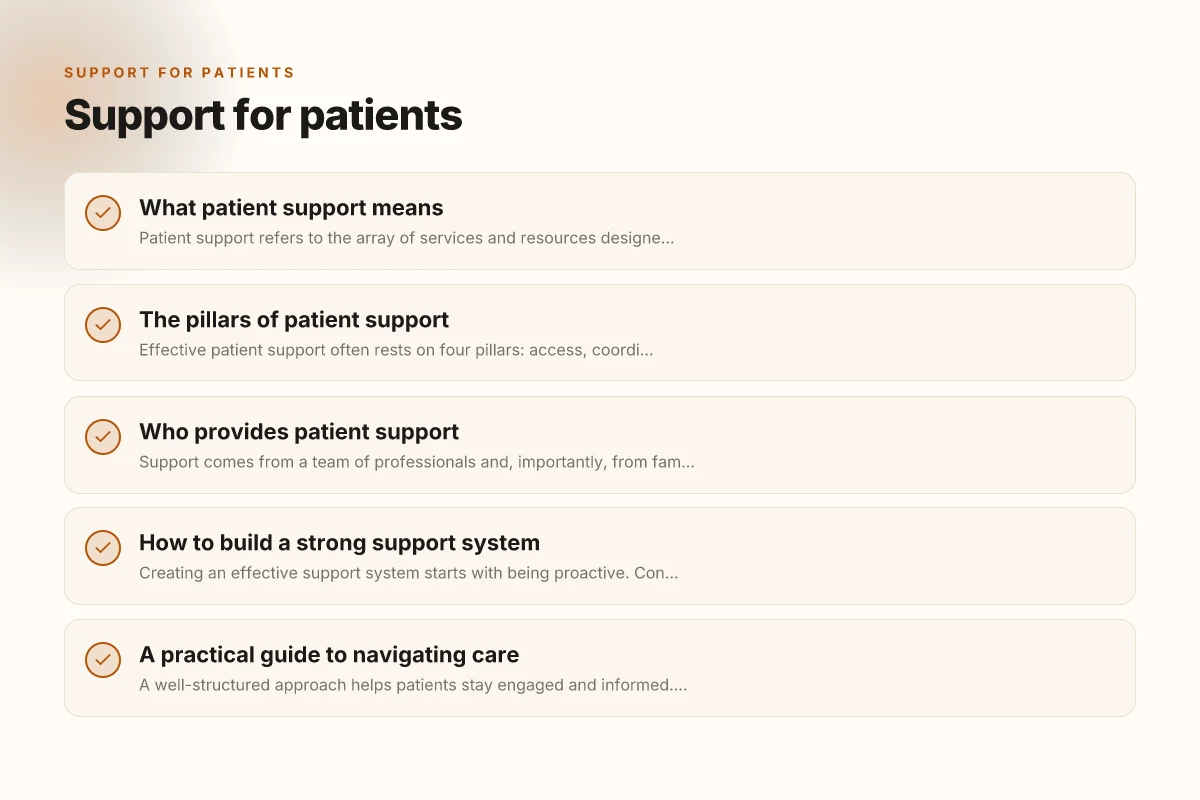
Patient support refers to the array of services and resources designed to help individuals navigate illness, treatment, and recovery. It includes:
- Medical support: symptom management, treatment planning, and coordination among specialists.
- Emotional support: psychological counseling, peer support groups, and mindfulness or stress-reduction resources.
- Practical support: help with transportation, finances, caregiving duties, and daily living tasks.
- Informational support: clear explanations of diagnoses, treatment options, risks, and expected outcomes.
- Social support: connections to family, friends, and community resources.
A robust support system is typically multidisciplinary, involving doctors, nurses, social workers, pharmacists, therapists, and patient navigators. The aim is to reduce barriers to care, empower patients to participate in decisions, and sustain well-being through the entire care journey.
The pillars of patient support
Effective patient support often rests on four pillars: access, coordination, education, and sustainability.
Access
Access means removing barriers to care so patients can obtain necessary services when they need them. This includes: Research Projects: A Practical Guide to Planning, Managing, and Sharing
- Flexible appointment scheduling, including telehealth options.
- Clear referral pathways between primary care and specialists.
- Financial assistance information and insurance navigation.
- Language-concordant care and culturally sensitive practices.
- Availability of supportive resources for rural or underserved communities.
Coordination
Care coordination ensures that all parts of a patient’s care plan work together. Key elements include:
- A primary point of contact (care coordinator or patient navigator).
- Shared medical records across providers for up-to-date information.
- Regular care plan updates and medication reconciliation.
- Clear communication of treatment goals and changes to the patient and family.
Education
Educating patients and families helps them participate confidently in care. Best practices include:
- Plain-language explanations of diagnoses and procedures.
- Information about benefits, risks, alternatives, and expected timelines.
- Written summaries of plans and a glossary of terms.
- Tools to track symptoms, side effects, and progress.
Sustainability
Sustainability focuses on long-term support beyond the hospital or clinic visit. It involves:
- Ongoing emotional and social support networks.
- Access to palliative or supportive care when appropriate.
- Resources for caregiver respite and mental health.
- Community programs that assist with housing, transportation, and nutrition.
Comparing Who Provides Patient Support Cancer Registration Scheme
| Provider Type | Typical Roles | Pros | Cons |
|---|---|---|---|
| Physicians | Medical advice; care decisions | Expert guidance; clarity | Time constraints; variability |
| Nurses/Patient Navigators | Coordination; education | Accessible; personalized | Workload; turnover |
| Social Workers | Resource linking; counseling | Holistic support | Availability; funding |
| Family/Criends | Daily support; advocacy | Familiar; continuous | Burnout risk; boundaries |
| Peer Support Programs | Shared experiences; mentoring | Hope; practical tips | Variable quality; reach |
| Patient Advocacy Groups | System-level advocacy; resources | Broad resources; voice | Bias toward group |
Compiled November 2026; check the provider's site for current details.
Who provides patient support
Support comes from a team of professionals and, importantly, from family and community partners. Typical contributors include:
- Physicians and nurse practitioners who diagnose, plan, and oversee medical treatment.
- Nurses who monitor symptoms, administer medications, and educate patients.
- Social workers who connect patients with financial aid, housing resources, and community services.
- Pharmacists who review medications for safety, interactions, and adherence.
- Therapists (psychologists, counselors) who support emotional well-being.
- Care coordinators or patient navigators who oversee the care plan and communication.
- Family members and friends who provide daily assistance, encouragement, and practical help.
- Community organizations and patient advocacy groups that offer resources and peer support.
For many patients, a single point of contact, often a nurse navigator or social worker, helps streamline interactions with multiple providers and keeps the care plan unified.
How to build a strong support system
Creating an effective support system starts with being proactive. Consider these steps: Publications: A Practical Guide to Understanding and Using Them
- Start with a clear, recent diagnosis and treatment plan. Ask your clinician to summarize goals, next steps, and milestones in plain language.
- Identify a primary point of contact. This could be a care coordinator, nurse navigator, or social worker who can arrange referrals and answer questions.
- Gather your information. Create a simple file with medications, allergies, imaging results, and contact details of your care team.
- Map out practical needs. Transportation, caregiving help, meal support, and financial assistance are common areas where help is needed.
- Engage your family or caregiving circle. Hold a family meeting to set expectations, roles, and boundaries.
- Explore patient resources. Look for hospital or clinic patient portals, support groups, and community programs in your area.
A practical guide to navigating care
A well-structured approach helps patients stay engaged and informed. Here is a practical framework:
- The first 24–72 hours after a new diagnosis
- Request a care plan summary and a list of questions to ask at the next appointment.
- Confirm the primary contact for questions and emergencies.
- Check insurance coverage for planned tests or treatments and identify financial assistance options.
- Before each appointment
- Write down symptoms, side effects, and any concerns.
- Bring a medication list, including over-the-counter drugs and supplements.
- Bring notes from any recent tests or consultations.
- After each appointment
- Review the visit notes, plan, and medications.
- Schedule follow-up or tests as advised.
- Notify essential family members or caregivers of any changes.
- Ongoing care
- Maintain regular check-ins with your care team.
- Track symptoms, pain levels, mood, and functional status.
- Reassess goals and plans with your clinician if circumstances change.
Practical Guide Navigator Matrix
| Step | Action | Tool/Resource | indicator of success |
|---|---|---|---|
| 1 | Identify needs | Assessment checklist | Clear needs list |
| 2 | Map supports | Network map | At least 3 contacts |
| 3 | Set goals | SMART goals | Written goals |
| 4 | Contact providers | Scripts/templates | First contact made |
| 5 | Track progress | Journal or app | Regular updates |
Compiled November 2026; check the provider's site for current details.
Practical resources and tools
To support patients effectively, healthcare systems employ a range of tools and services. Consider the following: Posters: A Practical Guide to Choosing, Designing, and Displaying Stunning Posters
- Patient portals with secure messaging, appointment scheduling, and test results.
- Care coordination services that help with referrals and transportation.
- Financial counseling to understand insurance benefits, deductible costs, and aid programs.
- Social work services for housing, food support, and community resources.
- Palliative and supportive care teams that focus on quality of life, not just disease treatment.
- Remote monitoring and telemedicine to maintain access to care from home.
- Educational materials tailored to literacy and language needs.
Here is a quick comparison to illustrate how different supports complement each other:
| Type of Support | What it covers | Who provides it | When to use it |
|---|---|---|---|
| Medical care coordination | Referral management, plan integration | Care coordinators, social workers, nurses | Throughout the care journey |
| Emotional/psychological support | Counseling, coping strategies | Psychologists, social workers, support groups | At diagnosis, during treatment, aftercare |
| Practical assistance | Transportation, housing, meals, finances | Social workers, community organizations | When daily tasks or logistics are challenging |
| Information and education | Plain-language explanations, care plans | Physicians, nurses, educators | At or before every major decision |
| Family and caregiver support | Respite, training, counseling | Social workers, caregiver programs | Ongoing, especially during intensive care phases |
Common barriers to patient support and how to overcome them
- Barrier: Fragmented care and lack of communication
- Solution: Request a care coordinator. Ask for a unified care plan and shared records.
- Barrier: Language, literacy, or cultural differences
- Solution: Request interpreter services. Ask for materials in your preferred language and at an accessible reading level.
- Barrier: Financial burden and insurance complexities
- Solution: Contact financial counselors. Inquire about charity programs, sliding-scale fees, and eligibility for assistance.
- Barrier: Transportation and logistics
- Solution: Seek social work support for transportation services or telehealth options.
- Barrier: Caregiver burnout
- Solution: Access respite services, caregiver support groups, and mental health resources.
The patient and family journey
A patient’s journey is rarely linear. It often involves adjustments to treatment plans, changing priorities, and evolving support needs. Keeping the patient at the center, the person who has the illness, helps align care with values and goals. Families and caregivers should strive to:
- Listen actively and honor patient preferences.
- Communicate openly with the care team about goals, concerns, and changes in status.
- Empower patients to participate in decision-making to the extent possible.
- Seek and accept support when needed. Caregiving is a shared responsibility.
Parents, siblings, partners, and friends all contribute uniquely to support. Patients may require different kinds of support at different stages, from diagnosis to treatment, survivorship, or end-of-life care. The goal is to maintain dignity, reduce distress, and promote the best possible quality of life.
Barriers and Enablers to Support Nurses: Roles, Training, and Impact in Modern Healthcare
| Barrier / Enabler | Description | Impact on care | How to address |
|---|---|---|---|
| Financial cost | out-of-pocket expenses | High burden | Grants; sliding scales |
| Transportation | travel to appointments | Delays | Telehealth; local services |
| Health literacy | understanding medical terms | Misunderstanding | Plain language; teach-back |
| Availability of staff | limited hours | Delays | Extended hours; appointment slots |
| Caregiver burden | family burnout | Reduced support | Respite; support groups |
| Technology access | devices/internet | Digital divide | Community centers; phone options |
| Social support | network strength | Recovery influence | Encourage outreach; peer programs |
Compiled November 2026; check the provider's site for current details.
How to advocate for better patient support
Advocacy can take many forms, from personal conversations to system-level improvements. Practical steps include:
- Ask questions and demand clear explanations. If something isn’t understood, request a simpler description or written summary.
- Ensure care plans are coordinated. If a provider seems to operate in silos, request a care conference with all relevant specialists.
- Seek access to patient navigators or social workers. They can streamline referrals, financing, and services.
- Push for comprehensive discharge planning. Hospitals should provide a plan for outpatient follow-up, medication management, and community resources.
- Engage with patient advocacy groups. These groups can offer resources, education, and a louder voice in policy discussions.
Final recommendation
For anyone seeking better patient support, start with one concrete action: identify a single point of contact within your health system who can coordinate care and answer questions. This person, often a nurse navigator or social worker, becomes your ally across the entire care journey. Build your support network around that anchor, include family or friends, healthcare professionals, and community resources. Maintain clear, ongoing communication, document your questions and goals, and actively participate in decisions about care and treatment. With coordinated access, emotional backing, and practical help, patients stand a stronger chance of achieving the best possible health outcomes and a better overall experience.