Community Arts Forum
A concise guide to what a Community Arts Forum is, what it offers, and how to participate effectively.
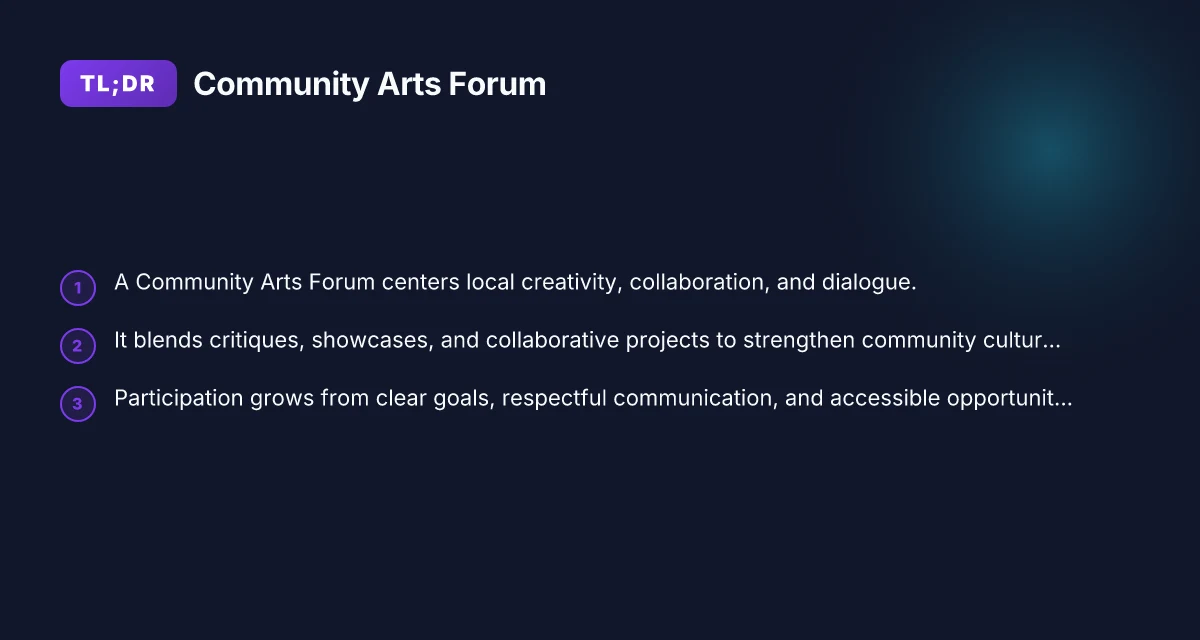
Communities everywhere benefit from spaces that cultivate creativity, dialogue, and shared projects. A Community Arts Forum is one such space, a gathering place, both online and offline, where artists, residents, organizers, and supporters come together to discuss, produce, and celebrate art that reflects local life. It isn’t just a gallery or a grant program. It’s a living, evolving platform for conversation, experimentation, and collective action around the arts.
Comparison of Forum Goals
| Goal | Focus | Encourages participation | Decision-making role | Resource needs | Typical timeline |
|---|---|---|---|---|---|
| Community engagement | Broad | yes | advisory | moderate | ongoing |
| Policy influence | Local governance | yes | yes | high | months to years |
| Education and skills | Capacity building | yes | no | low to moderate | short to medium |
Compiled November 2026; check the provider's site for current details.
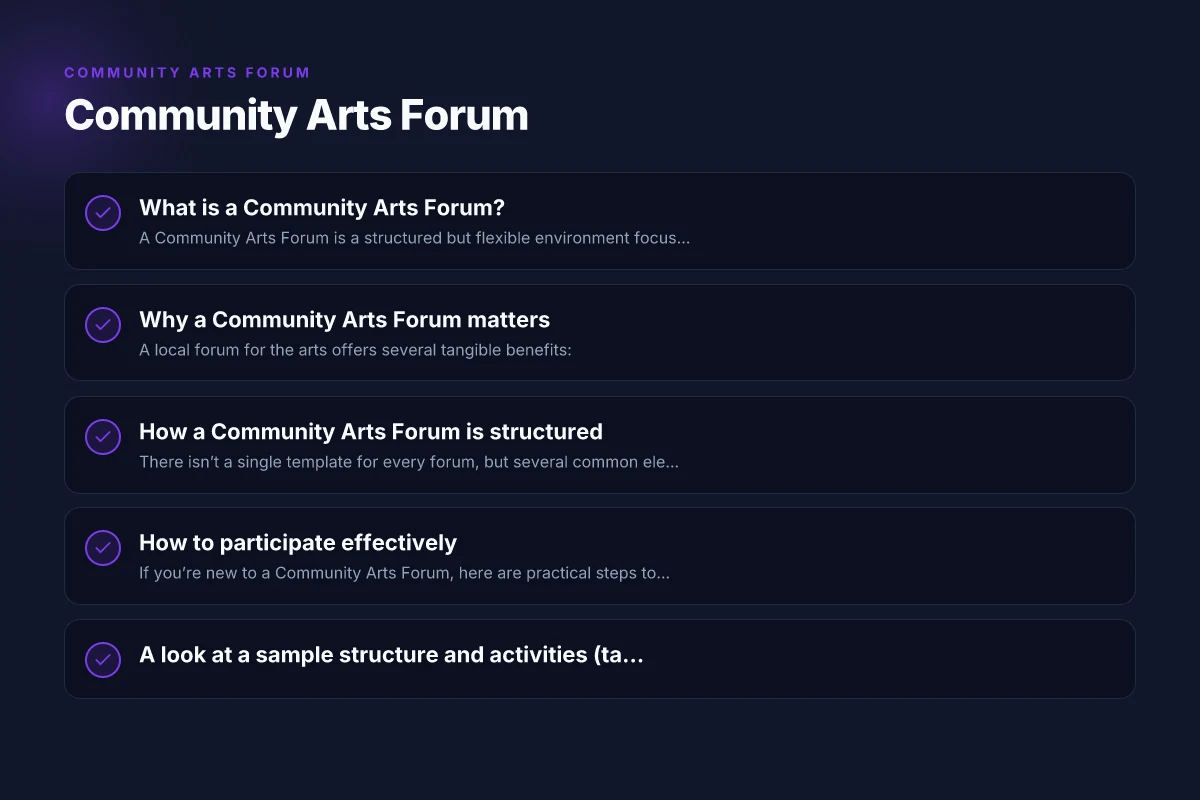
What is a Community Arts Forum?
A Community Arts Forum is a structured but flexible environment focused on community-driven art initiatives. It usually includes:
- Regular meetings or online discussions where stakeholders can share ideas, projects, and concerns.
- Curated opportunities for collaboration across disciplines (visual art, music, dance, theater, literature, media, and more).
- Spaces for feedback, critique, and learning that are respectful and constructive.
- Accessible pathways for residents to participate, contribute, and lead projects.
What makes it distinct is its emphasis on local relevance and shared ownership. Decisions are often made by a steering group with broad community representation, rather than a single institution. This ensures that the art formed in the forum speaks to the everyday experiences, histories, and aspirations of the people who live there.
Why a Community Arts Forum matters
A local forum for the arts offers several tangible benefits:
- Social cohesion: People connect across ages, backgrounds, and skills, building trust and networks.
- Cultural vitality: Local stories, traditions, and innovations get a platform, enriching the community’s public life.
- Capacity building: Residents gain skills in project planning, fundraising, curation, and collaborative workflows.
- Access and equity: Programs can be designed to reach underserved groups, removing barriers to participation.
- Economic opportunities: Collaborations can lead to public art commissions, dual-use spaces, and small business ideas tied to culture and tourism.
In many communities, the forum becomes a hub for ongoing learning, workshops on digital storytelling, mural painting, or community radio. Critique circles for aspiring writers. Or rehearsal spaces for local performers. The goal is not merely to produce art but to nurture a culture of participation and shared responsibility for the place itself. Motives for development of BHA
How a Community Arts Forum is structured
There isn’t a single template for every forum, but several common elements appear in successful models:
Governance and representation
- A rotating steering committee or advisory council that includes artists, educators, youth, seniors, business owners, and community organizers.
- Clear bylaws or terms of reference to define roles, decision-making processes, and conflict resolution.
Programs and activities
- Open studios, artist talks, and community exhibitions to invite broad participation.
- Collaborative residencies or community-led mural projects that pair residents with artists.
- Panels or forums on topics like public space, heritage, or digital accessibility.
Participation channels
- Regular in-person meetings, with a virtual option for those who cannot attend.
- Project-based signups, surveys, and open calls to solicit ideas.
- Mentoring or apprenticeship tracks to bring new contributors into leadership roles.
Resources and partnerships
- Access to funding guidance, rehearsal and studio spaces, and technical equipment.
- Partnerships with schools, libraries, cultural centers, and local businesses.
- Outreach efforts to ensure inclusivity (translation services, childcare, transportation support).
Comparison of Forum Structures
| Structure element | Centralized vs. decentralized | Stakeholder representation | Meeting cadence | Decision process | Documentation |
|---|---|---|---|---|---|
| Governance model | centralized / distributed | broad / narrow | regular / ad hoc | formal / informal | minutes / summaries |
| Roles | facilitator / coordinators | artists / residents / funders | monthly / quarterly | consensus / voting | published / not public |
| Access | open / invitation | diverse / limited | frequent / infrequent | transparent / opaque | archived / ephemeral |
Compiled November 2026; check the provider's site for current details.
How to participate effectively
If you’re new to a Community Arts Forum, here are practical steps to get involved and make a meaningful impact: Investing in BHA
- Attend an introductory session: Many forums host orientation events or open meetings to explain how they work and how to plug in.
- Clarify your goals: Ask yourself what you want to learn, contribute, or create. This helps you decide which projects to join.
- Listen actively: Read the room before proposing new ideas. Acknowledge existing work and show how your contribution aligns with community priorities.
- Bring solutions, not just problems: When you raise an issue, offer possible paths forward, even if imperfect.
- Seek diverse perspectives: Proactively engage with neighbors who might have different experiences or voices than your own.
- Volunteer for leadership or support roles: Start small (help with events, outreach, or documentation) to build credibility and understanding of the forum’s workflows.
- Follow up and follow through: If you commit to tasks, deliver on them and share progress with the group.
A look at a sample structure and activities (table)
| Element | Purpose | Typical activities |
|---|---|---|
| Open Forum Meetings | Share ideas and update the community | Monthly town-hall style discussions, project pitches, Q&A |
| Project Residencies | Develop long-term community art projects | Artist-in-residence programs, collaborative murals, neighborhood theater works |
| Critique and Feedback Circles | Improve work through respectful critique | Studio critiques, peer reviews, audience feedback sessions |
| Education and Capacity Building | Grow skills and leadership | Workshops (fundraising, grant writing, digital art), mentorship pairings |
| Outreach and Inclusion | Expand access and representation | Language-accessible events, transportation stipends, childcare at events |
Quick-Start Setup Options
| Option | Description | Ideal for | Required resources | Potential risks | Quick-start steps |
|---|---|---|---|---|---|
| Community hub | physical or virtual space for ongoing activities | neighborhoods | moderate funding, space | scheduling conflicts | map stakeholders, secure space |
| Themed task force | short-term group with a clear objective | specific projects | limited funding, time | scope creep | define objective, recruit volunteers |
| Public forum series | regular public discussions | broad audience | modest logistics | low attendance | select topics, promote widely |
Compiled November 2026; check the provider's site for current details.
Real-world examples and outcomes
Every community is unique. Several outcomes are common across successful Community Arts Forums:
- Public art that reflects local history, stories, and landscapes, transforming ordinary spaces into meaningful places.
- Increased volunteerism and civic engagement, with residents taking leadership in cultural initiatives.
- Cross-sector collaborations, blending art with education, health, and urban planning to address community needs.
- A portfolio of local artists who gain visibility, commissions, and ongoing support networks.
- Documentation and storytelling that preserve memory and share lessons with other communities.
For example, a city neighborhood might host a mural festival through the forum, pairing senior residents with high-school artists to create a series of murals that narrate the area’s evolution. A library might collaborate on a community archive project, inviting residents to digitize photos and oral histories. A small business association could sponsor a pop-up gallery in a vacant storefront, revitalizing a block and generating interest in more permanent cultural programming. Goals of BHA
How forums relate to local governance and policy
Community Arts Forums often intersect with local governance in meaningful ways:
- They can inform urban planning by offering creative perspectives on public spaces and placemaking.
- They can advocate for inclusive policies, such as affordable studio spaces and funding for cultural programming.
- They can serve as a bridge between residents and city departments, translating community needs into concrete actions.
To be effective in this space, forums typically maintain transparent documentation, publish annual reports, and host public meetings where city stakeholders can listen and respond. Building relationships with local officials and funding bodies helps ensure programs are sustainable and scalable.
Getting started with your own Community Arts Forum
If you’re interested in starting a forum or revamping an existing one, consider these steps:
- Define a shared purpose: What is the forum trying to achieve in the next year? What art forms and communities will it serve?
- Map stakeholders: List potential participants, partners, and funders. Identify gaps in representation and access.
- Design a simple governance model: Create roles (coordinator, treasurer, outreach lead) and decision-making rules that emphasize transparency and inclusion.
- Launch an accessible program slate: Plan a mix of introductory events, hands-on workshops, and creative showcases that welcome beginners and veterans alike.
- Establish communication norms: Set expectations for respectful dialogue, feedback, and conflict resolution.
- Track impact: Develop lightweight metrics (participants, projects completed, funding secured, attendees reached) to demonstrate value and attract support.
The recommendation
If you want a vibrant, thriving community arts ecosystem, prioritize inclusive participation and shared leadership. A Community Arts Forum thrives when residents see their ideas reflected in projects, and when artists and organizers practice active listening, equitable access, and collective decision-making. Start with a clear, welcoming framework. Build a diverse network of participants. And focus on small, achievable projects that accumulate momentum. Over time, the forum becomes not just a place to talk about art, but a catalyst for a more connected, creative, and resilient community. Development of BHA